Cloud infrastructure.
We set up, move, and run the cloud your software lives on: the servers, the databases, the deployments, the monitoring. It stays up under real traffic, runs heavy work without running up the bill, stays locked down, and lives on your own AWS account with you holding the keys. The same setups have run live products and handled real load in public.
Part of our Cincinnati software studio// 01 · WHAT WE HANDLE
THE CLOUD YOUR SOFTWARE RUNS ON,
SET UP AND KEPT RUNNING.
Most businesses do not want to think about servers. They want their software up, fast, and not quietly overbilling them. That is the part we take off your plate.
Setup and hosting.
Your app or site stood up on AWS the right way from the start, with security, backups, and HTTPS handled, not bolted on later.
Processing pipelines.
Heavy work like rendering, file processing, and video, built to run on powerful machines only while a job is actually running.
Cost control.
Reading your actual cloud bill, cutting what is wasted, and sizing what is left to the work it really does.
Security hardening.
Closing the open doors bots attack all day: exposed logins, open servers, default settings left untouched.
Migrations.
Moving off a slow, expensive, or risky host onto infrastructure you control, without the downtime people expect from a move.
Keeping it running.
Monitoring, alerts, automatic backups, and someone who actually answers when something breaks.
// 02 · COST
STOP PAYING FOR CLOUD YOU ARE NOT USING.
A cloud bill is one of the easiest places in a business to lose money without noticing. A test server someone left running after the project shipped. A backup disk nobody ever detached, billing every month for nothing. A single networking component that costs about $45 a month whether you touch it or not. These do not show up as a problem. They just quietly raise the number at the bottom of the bill. We have gone through real AWS bills line by line and found hundreds of dollars a month going to resources doing no work at all.
The other half is sizing. A lot of cloud cost is not leftover junk, it is servers two or three sizes bigger than the work they actually do, bought once and never looked at again. We match the machine to the real workload: a small, inexpensive server for steady, modest traffic, short bursts of power for work that spikes and settles, and room to step up as you grow instead of paying today for traffic you hope to have next year.
Reading your bill is a low-risk way to start. We tell you where the money is going, cut what is wasted, size what is left, and set a billing alert so a surprise charge never builds up unnoticed again. For a lot of businesses this is the fastest money we can save them.
// 03 · PIPELINES
PAY FOR HEAVY COMPUTING ONLY WHILE IT IS RUNNING.
Some software has to do heavy work in bursts: render a video, process a large file, crunch a batch of data. The lazy way to handle that is a big server running around the clock, waiting for work that shows up a few times a day. You pay for it every hour, and most of those hours it does nothing.
We build it the other way, so the work itself triggers the machine. A file lands in storage, that automatically kicks off a job, a powerful machine spins up just for that job, does the work, and shuts down the moment it is finished. You pay for the minutes it ran, not the month it sat idle. For the heavy machines we lean on spare cloud capacity that comes at a steep discount, which suits this start-and-stop work perfectly.
We have built exactly this. AE Organizer processes After Effects projects by spinning up a Windows machine running After Effects only when there is a project to handle, then shutting it down when it is done. Mercy produced personalized videos on demand for Amazon MGM at CES, composing each one with FFmpeg as it was requested, fast enough to hand back to someone standing right in front of the screen. Same idea underneath: the expensive machine only exists while it is earning its keep.
// 04 · SECURITY
LOCKED DOWN AGAINST THE ATTACKS THAT ACTUALLY HAPPEN.
Most sites are not attacked by a mastermind. They are attacked by bots, all day, every day, trying the same handful of open doors: the login page, an exposed admin, a server that will answer anyone who knocks. We close those doors before they are ever found.
The server only accepts a remote connection from you, with a key instead of a password, so there is nothing for a bot to guess. We do not leave the admin and login pages sitting in the open either. On one setup we put the entire WordPress admin behind a second lock, so a bot cannot even reach the login screen, and served the public site headless, keeping the part of the system the public can touch as small as possible. Disks are encrypted, passwords and keys are stored properly rather than pasted into a config file, and nothing is left on its default setting, because the defaults are the first thing an attacker tries.
// 05 · MIGRATIONS
MOVE TO BETTER HOSTING WITHOUT GOING DARK.
Moving a live site or app to a new host is where a lot of businesses get burned: hours of downtime, email that stops working, a week of things not quite right. It does not have to go that way, and when it is done carefully it should barely be noticeable to the people using it.
We stand the new server up and test it completely before a single visitor is pointed at it. We leave your email alone so it keeps working through the move. We switch over in a way that lets us roll the change back within minutes if anything looks off, and we keep the old host alive as a fallback until the new one has run clean for a couple of weeks. On one migration we opened the old site’s backup and found files that had no business being there, a sign the site had been quietly hacked on its old host. We rebuilt it from clean, stock software and left the bad files behind, so the client came out of the move with a site that was both faster and safer than the one they started with.
// 06 · OWNERSHIP
IT RUNS IN YOUR OWN ACCOUNT, NOT OURS.
Everything we build runs on your cloud account, in your company’s name, with you holding the keys. You are never renting your own infrastructure back from us, and you are never stuck because one person is the only one who can get in. We set it up and document it so your own team, or another shop, can take it over whenever you want. The work is yours, and so is the ability to walk away with it.
// 07 · PROOF
INFRASTRUCTURE THAT
HANDLED REAL LOAD.
The real test of infrastructure is a bad day: a traffic spike, a launch, a live event with people standing in front of it. These held up.

Mercy
A live AI pipeline running on AWS through CES, generating evidence on demand for a floor full of visitors without falling over.
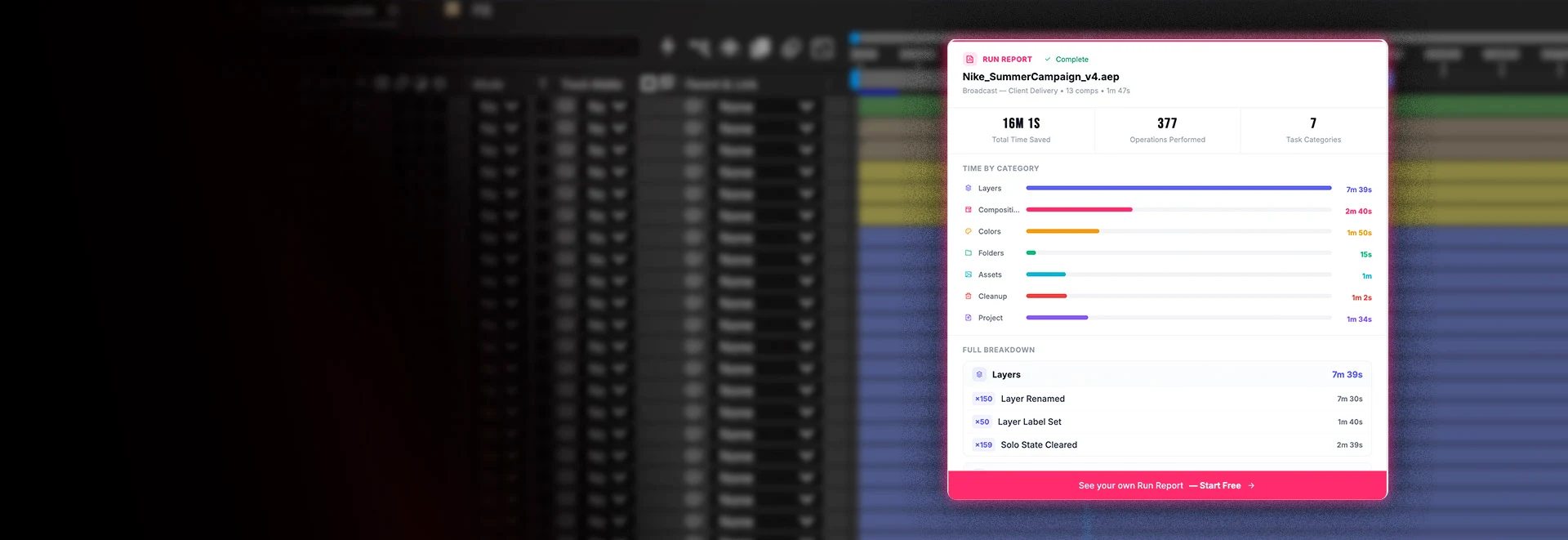
AE Organizer
A product whose servers spin up only when there is a job to run and shut down when it is done, so it costs next to nothing while it sits idle.
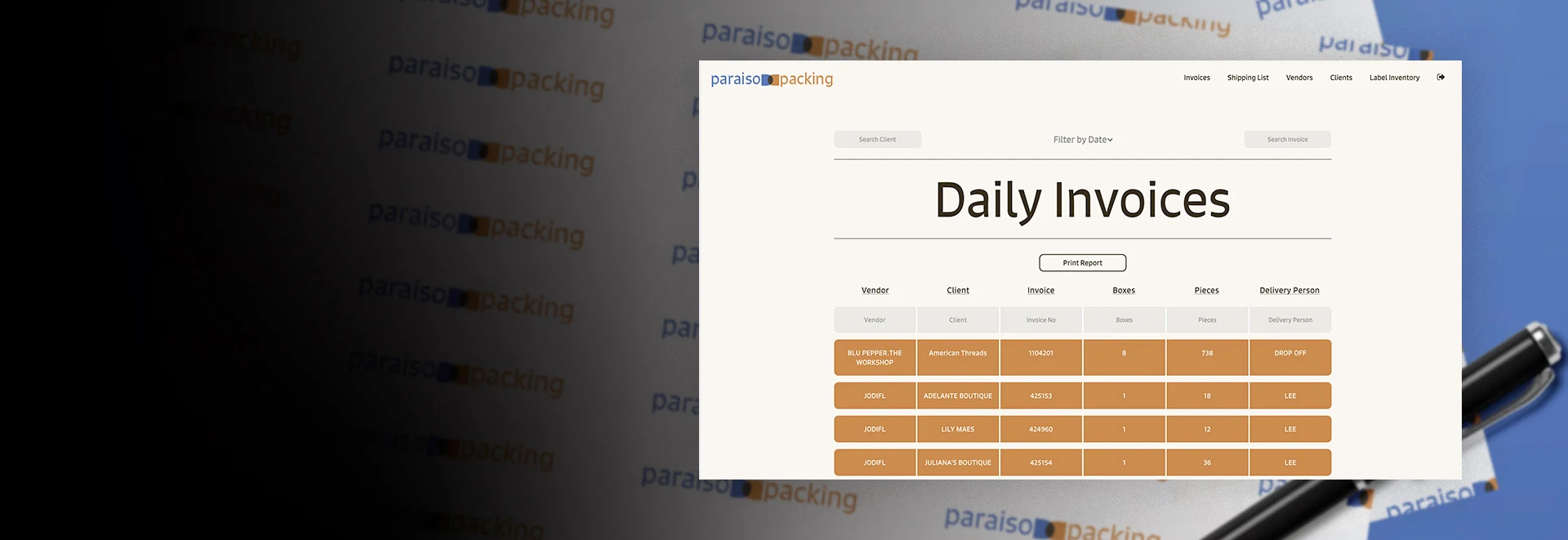
Paraiso Packing
A warehouse system rebuilt from constant timeouts to instant, on infrastructure sized to the work it actually does.
And the same approach keeps everything we host up, fast, and lean.
See all work// 08 · FAQ
COMMON QUESTIONS.
Do we have to be on AWS?
AWS is what we know deepest and what we would usually recommend, but the approach is the same anywhere: your account, your control, built to last. If you are already on another provider, we will work with what you have rather than force a move you do not need.
We already have a developer. Can you just do the cloud part?
Yes. A lot of our infrastructure work sits alongside an in-house team or another developer. We handle the servers, the deployments, and keeping it running, and stay out of the rest.
Can you handle heavy processing, like video or large batch jobs?
Yes, and in a way that does not cost a fortune. We have built setups that fire up a powerful machine only when a job comes in and shut it down the moment it is done, including running After Effects and FFmpeg on the server to produce video on demand. You get the horsepower when you need it and pay almost nothing when you do not.
Can you just look at our bill first?
Yes, and it is a good way to start. A bill review is low risk: we read what you are actually being charged for, tell you where the money is going, and what we would cut. Often that pays for itself right away.
What will it cost?
Setup and migrations are scoped to a fixed number before you commit. Ongoing, you pay the cloud provider directly for what you use, usually less than before once we have cleaned it up, plus whatever support arrangement we agree on.
Who owns it?
You do, start to finish. Your account, your keys, your code. It is built so you can hand it to anyone you choose.
// START HERE
TELL US WHAT
YOU'RE BUILDING.
Twenty minutes with a senior engineer, and you'll leave with how we'd build it, roughly what it takes, and what we'd worry about first. We read every message ourselves and reply within one business day.
A rough idea is enough to start.
That's in front of us now.
You'll hear back within one business day, from an engineer rather than a form letter. Nothing else needed on your end.
Or just email us at hello@queencity.io