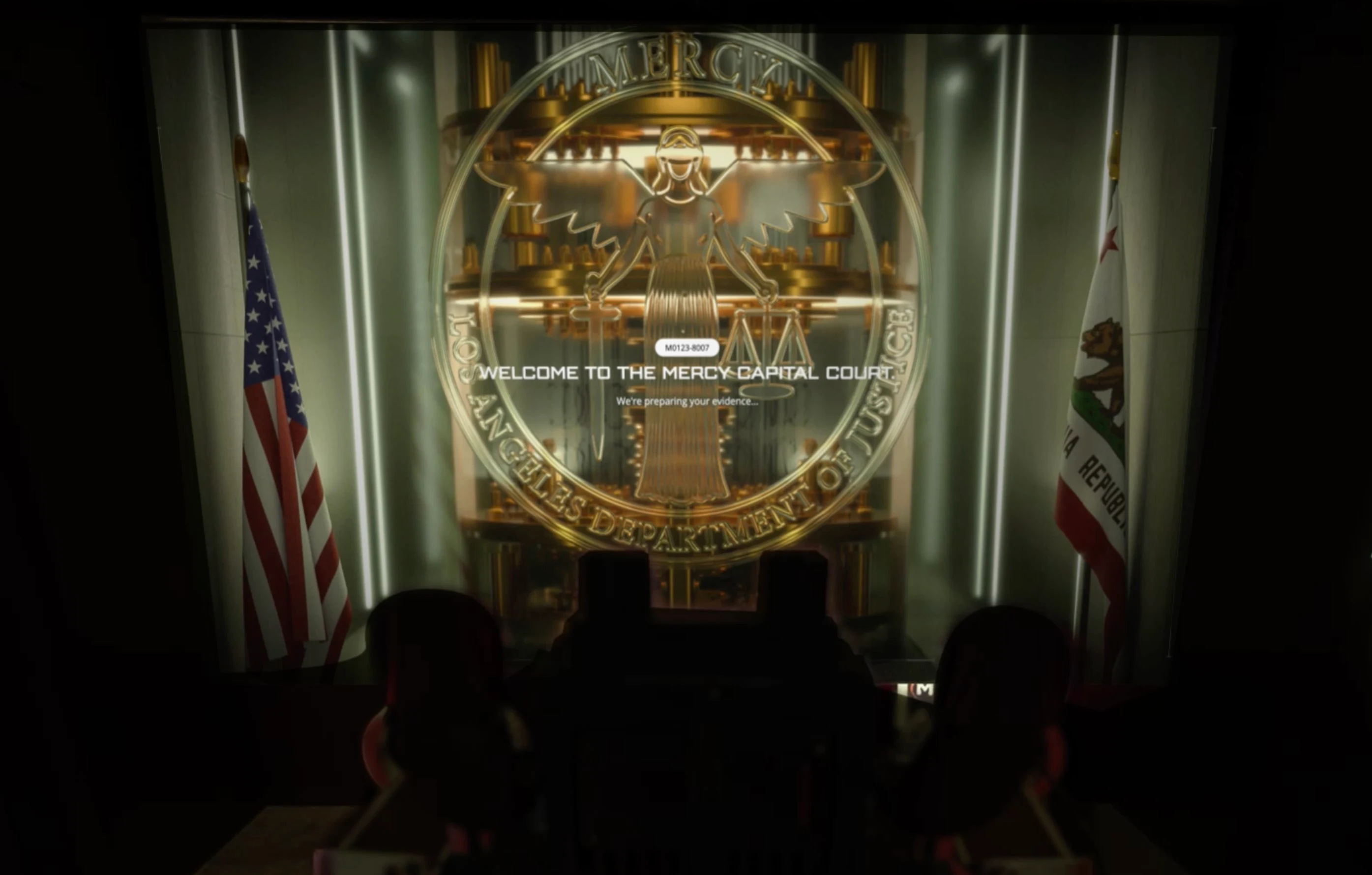
AMAZON MGM STUDIOS · 2026 · LIVE EXPERIENCE
Mercy
709 trials in three days. Every one personalized.
A CES booth that put visitors on trial for a crime they didn't commit, using AI evidence generated from their own face while they waited in line.
// 01 · THE SITUATION
The film's premise, rebuilt as something you could stand inside.
Mercy is a film about proving your innocence to an artificial intelligence. Amazon MGM wanted that premise on the floor at CES: a booth where a visitor sits in the chair, faces the AI, and has ninety seconds to argue their way out.
A trade show vendor was building the physical booth. Everything that made it work was ours: registration, the AI pipeline that generated evidence from a participant's own face, the queue that kept a line moving, the trial itself running live across several screens, and the personalized trailer waiting in their inbox afterward.
CES 2026 opened January 6, and nearly 148,000 people would come through it over three days. We had eight weeks to build everything that made the booth work.
// 02 · WHAT WE BUILT
Five systems, and a person waiting on all of them.
Registration, generation, queue, trial, and the trailer afterward. Someone handed us their face at the door and sat down in front of a case built against them a few minutes later.
The photo decides everything downstream.
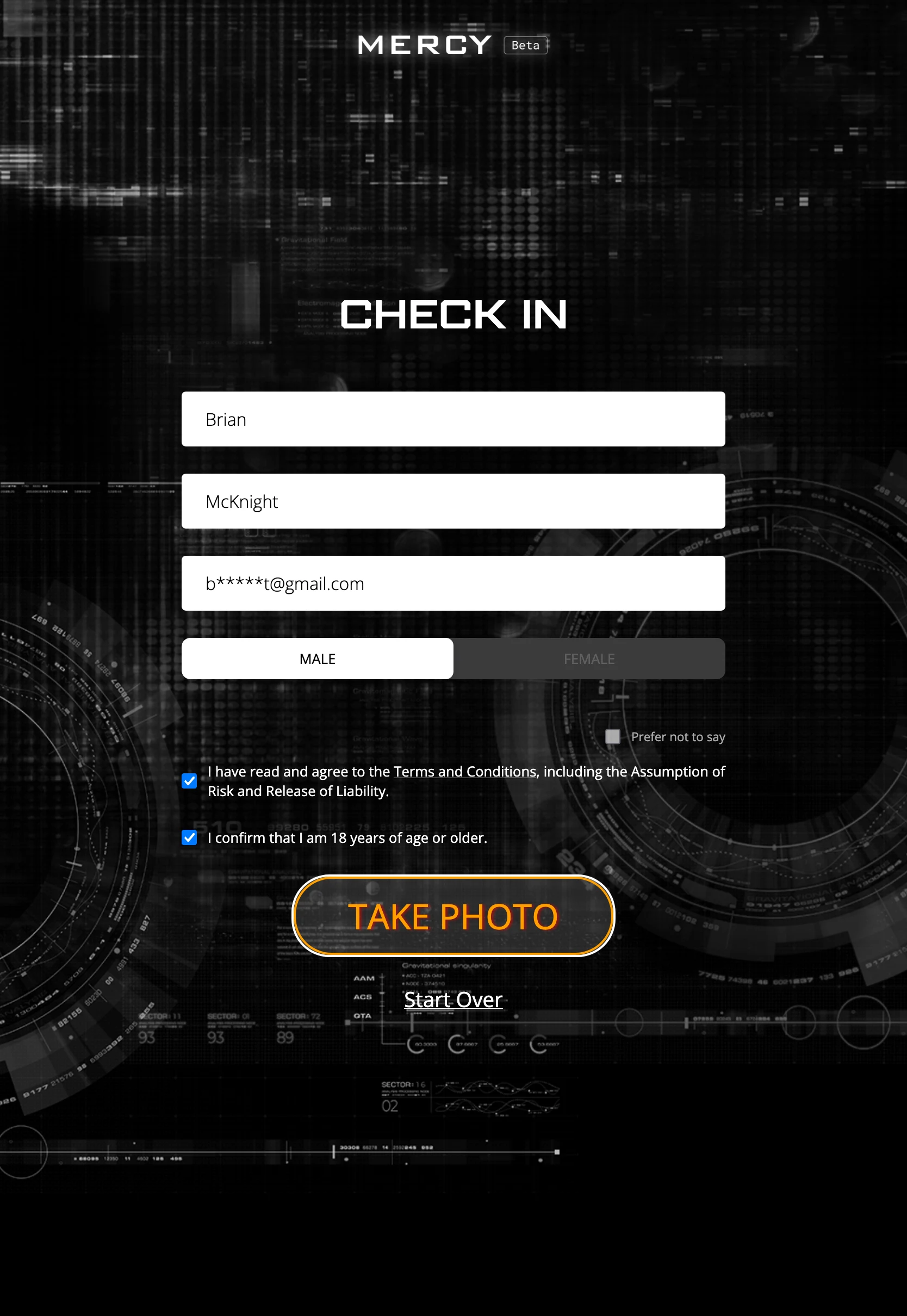
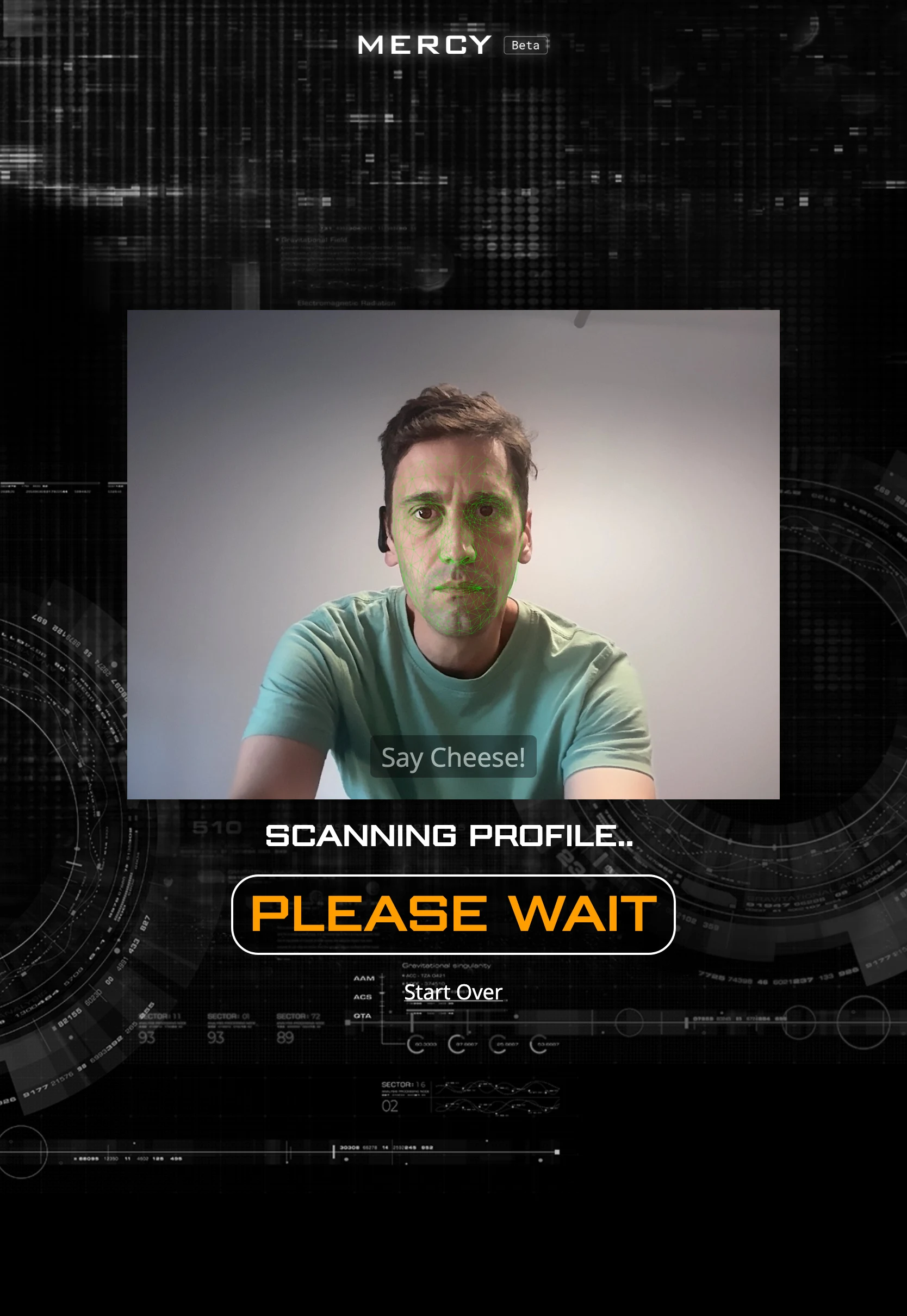
An iPad outside the booth took basic details and a selfie, with a live face mesh drawn over the camera as it captured.
That mesh did two jobs. It looked like the film. And it confirmed the face was framed and centered before the photo went anywhere, because a bad capture produces bad evidence, and on a trade show floor there is no time to notice and start again.
Quality control at the point of capture is the least glamorous decision on this project and the one everything else depended on.
See the registration iPad, face mesh active↓Six pieces of AI evidence, built while they stood in line.
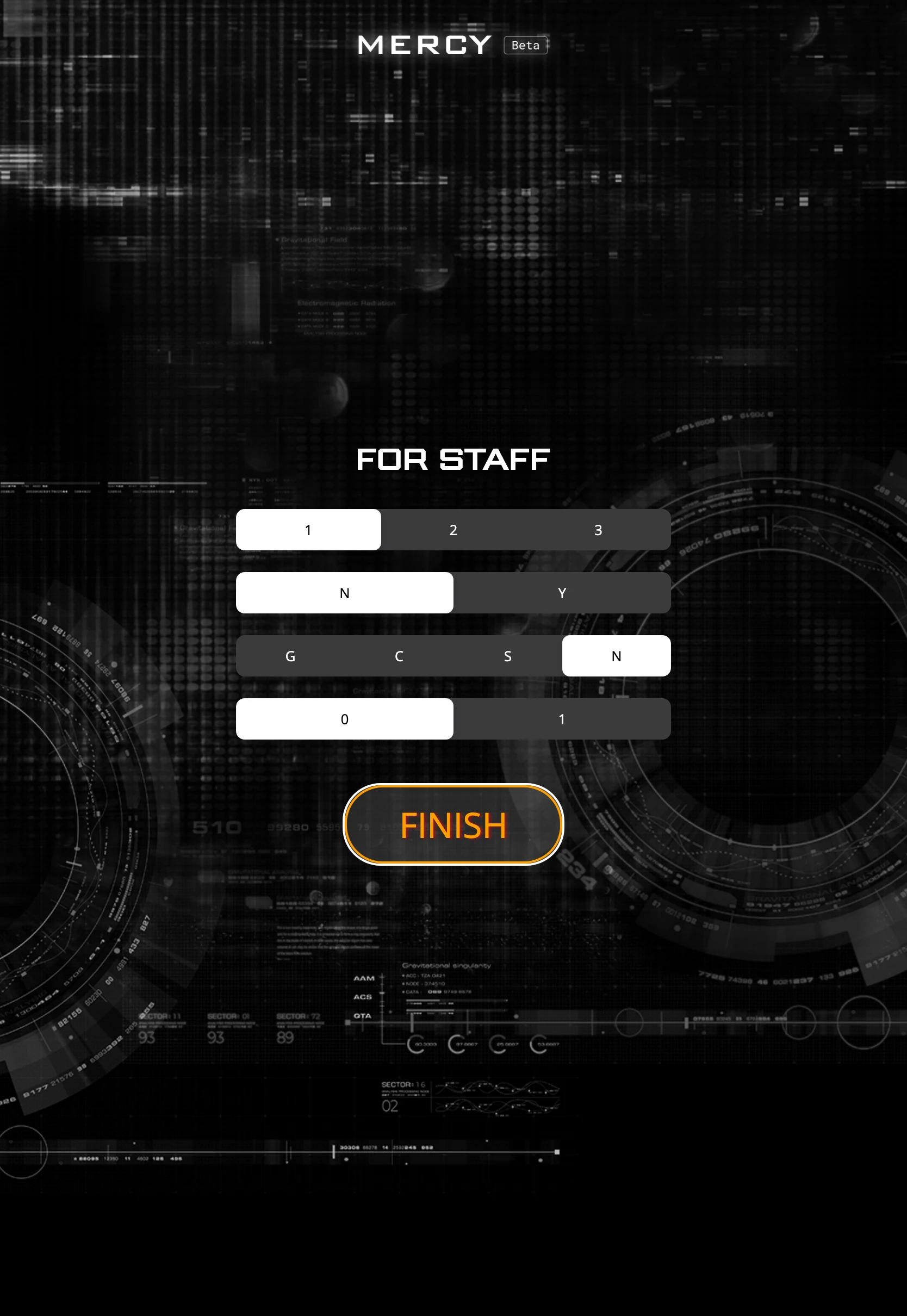
Three cases existed: a casino heist, a homicide, and a grand theft auto. Participants were assigned on rotation, and an operator could override that to place someone into a specific one, which mattered for journalists, client-side guests, and anyone we wanted to walk through a particular story. It made testing possible too.
The same screen was where an operator recorded a participant's body type and flagged any accessibility needs, both of which changed what the pipeline produced.
From there, the photo went through background removal and into generation. Six pieces of AI evidence per person: three images and three videos, surveillance material that incriminated them and material that raised doubt, every frame of it starring them.
Failed generations retried automatically. A person reaching the front of a line with no evidence is not a recoverable situation in front of an audience.
See a participant's generated evidence set↓A line of people is a system too.
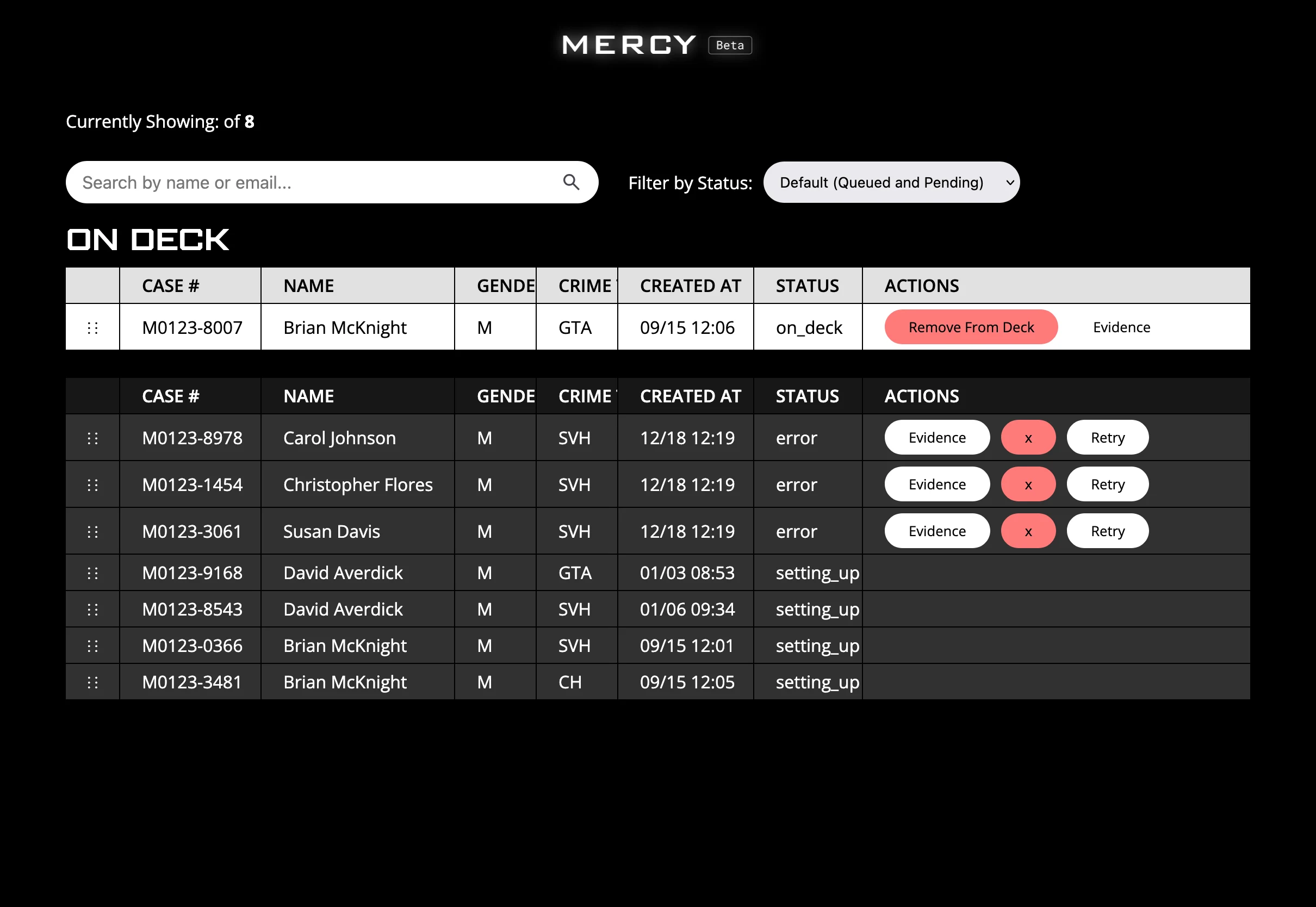
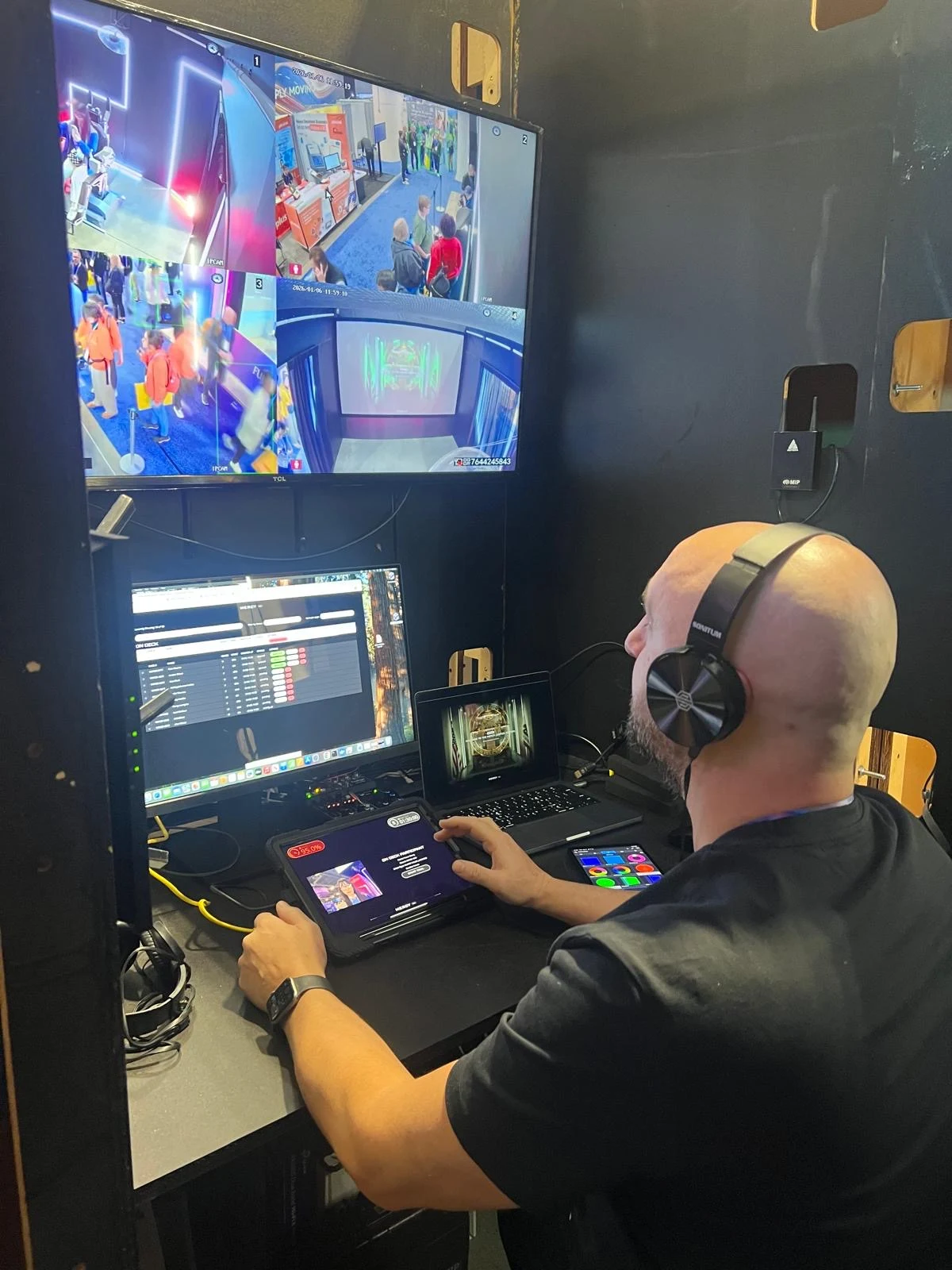
A second iPad, embedded in the booth wall, showed the operator who was next. They could reorder the queue, remove anyone who left, and confirm identity at the front.
Moving a participant to "on deck" triggered the next piece: a personalized AI news broadcast, played on a wall-mounted screen behind privacy panels. Breaking news, a high-speed chase in Los Angeles, a stolen car, and the prime suspect's face is theirs. It previewed the evidence and explained what was about to happen.
By the time it finished, they knew what they were accused of. Then they walked into the booth, sat down in the chair, and the clock started.
See the queue console↓Ninety seconds, three screens, one operator.
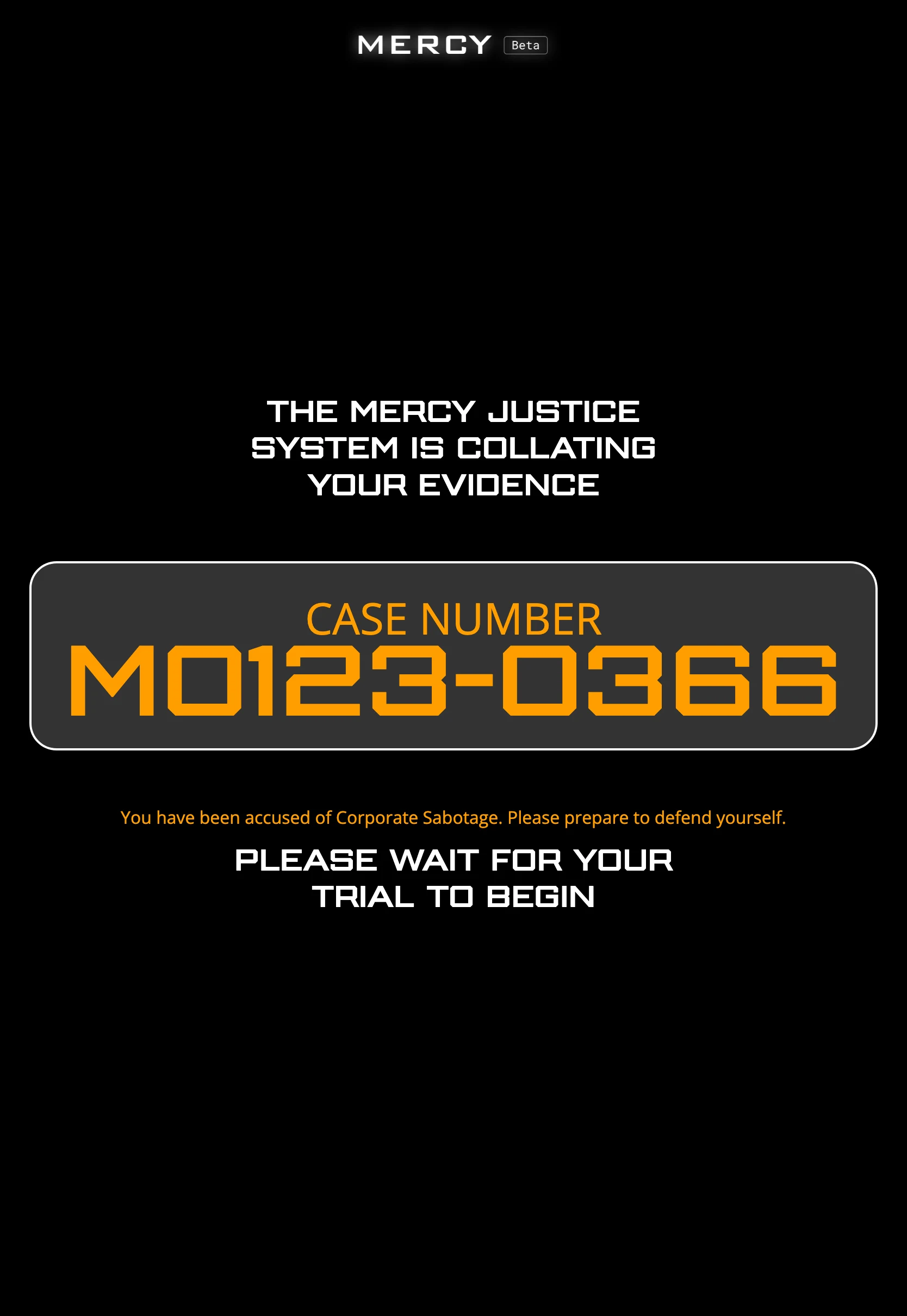
The participant sits, a countdown starts, and a large screen shows three evidence categories: security footage, social media, and phone data, six items in each. They call out what they want opened. The operator opens it, the evidence appears with narration read in the voice of the film's AI, and their innocence score moves up or down. Reach the threshold and the verdict is not guilty. Run out of time and sentencing follows.
The operator worked from an iPad, not a mouse, because a thumb on a button is faster than a cursor hunting for one.
Every trial ended the same way, a verdict and then all six pieces of AI evidence shown on the display. So nobody left without seeing the full set made for them.
See the trial interface, countdown running↓709 trailers. No two the same.
The end of a trial fired a handoff. The booth's local instance posted the participant's data to a second deployment of the same application running in AWS: their score, their evidence, and the generation IDs behind it. That instance pulled the source images back down, and started the render.
FFmpeg did the compositing, building filter chains that stitched the participant's generated footage against the real Mercy trailer, with backgrounds, overlays and audio pulled from S3. Three base cuts, one per case, and a unique render per person on top of that. Nobody received the same trailer as anyone else who walked through that booth.
See a frame from a personalized trailer↓// 03 · THE HARD PART
Some participants arrived in wheelchairs. So did their evidence.
The agency, Stellar, raised this early: the booth had to work for people who use wheelchairs. The physical answer was straightforward: flag it at registration, alert the queue operator, move the trial chair aside so a wheelchair could take its place.
The question was how far to carry it. The evidence is generated footage of the participant moving through a scene. Generate the standard set and a wheelchair user watches surveillance video of themselves walking across a room.
So the accessibility path ran the whole way through the pipeline. It exists in the system as its own trial variant, with its own generation configuration, producing surveillance footage and a trailer showing that person as they actually are.
// 04 · THE NUMBERS
Every trial, every frame, made for one person.
709
trials run over three days
4,254
unique pieces of AI evidence, six per person
5
screens, each running its own task, all in sync
// 05 · THE STACK
Why these choices.
On-prem, because the CES network couldn't be trusted. Everyone who had worked a trade show floor told us the same thing: it will fail, and it will fail when it matters. So the whole system ran on a single Mac Studio inside the booth, the web server, database, workers, AI orchestration, and every screen, all on one local network. The only thing that ever left the booth was the trailer render, and that happened after the participant had already gone.
The booth came up in one double-click. A startup script brought the database and workers up in containers, started the server, and opened the trial display full-screen. Power on the machine, click the icon, the booth is live, with no terminal and no checklist on a morning that has time for neither.
Every device found the server by name, not by luck. The venue network wasn't ours to control and wasn't one to trust: no DNS, no guarantee an IP would last the day. We gave the machine a name on the local network, mercy-ces.local, and a certificate for it, so two iPads and a wall of displays reached it by name instead of by whatever DHCP handed out that morning.
Every screen stayed in sync, and recovered on its own. The operator's console and every display in the room held the same live state in real time, not as page loads. If a screen dropped mid-trial, it reconnected and resynced by itself, without anyone restarting the session.
Nothing a participant could see ever waited on slow work. Evidence generation and voice narration both take time, so both ran in the background. Narration was cached against its text so the same line was never generated twice, and a stalled generation never became a person standing at the front of a line with no case against them.
The heavy media work was proven parts, each doing one job. Background removal, the on-device capture mesh, and the final video composite each ran on a dedicated tool rather than one model asked to do everything. It kept every stage inspectable and fast enough to finish inside a line that never stopped moving.
// 06 · THE GALLERY
The participants journey.
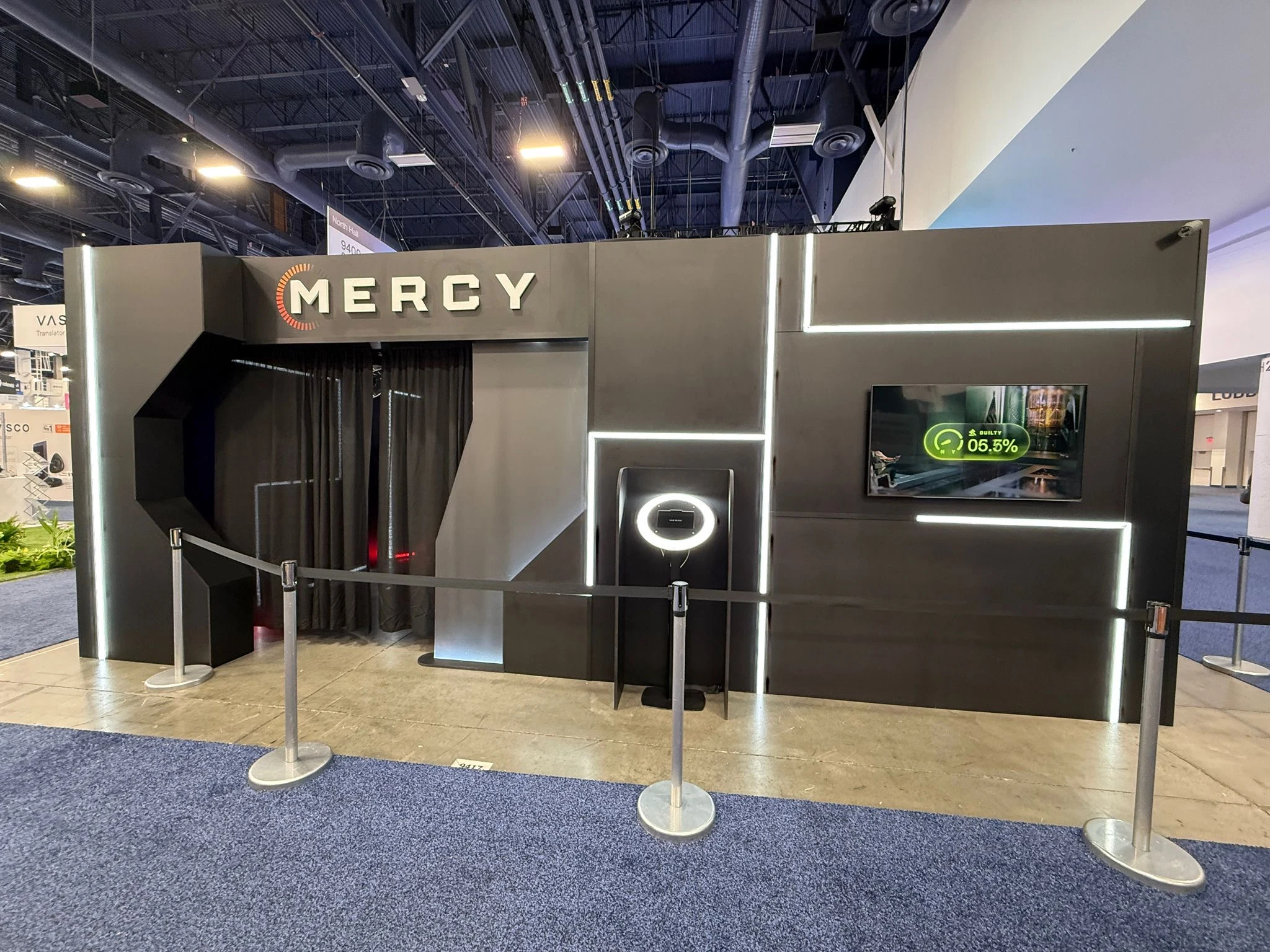
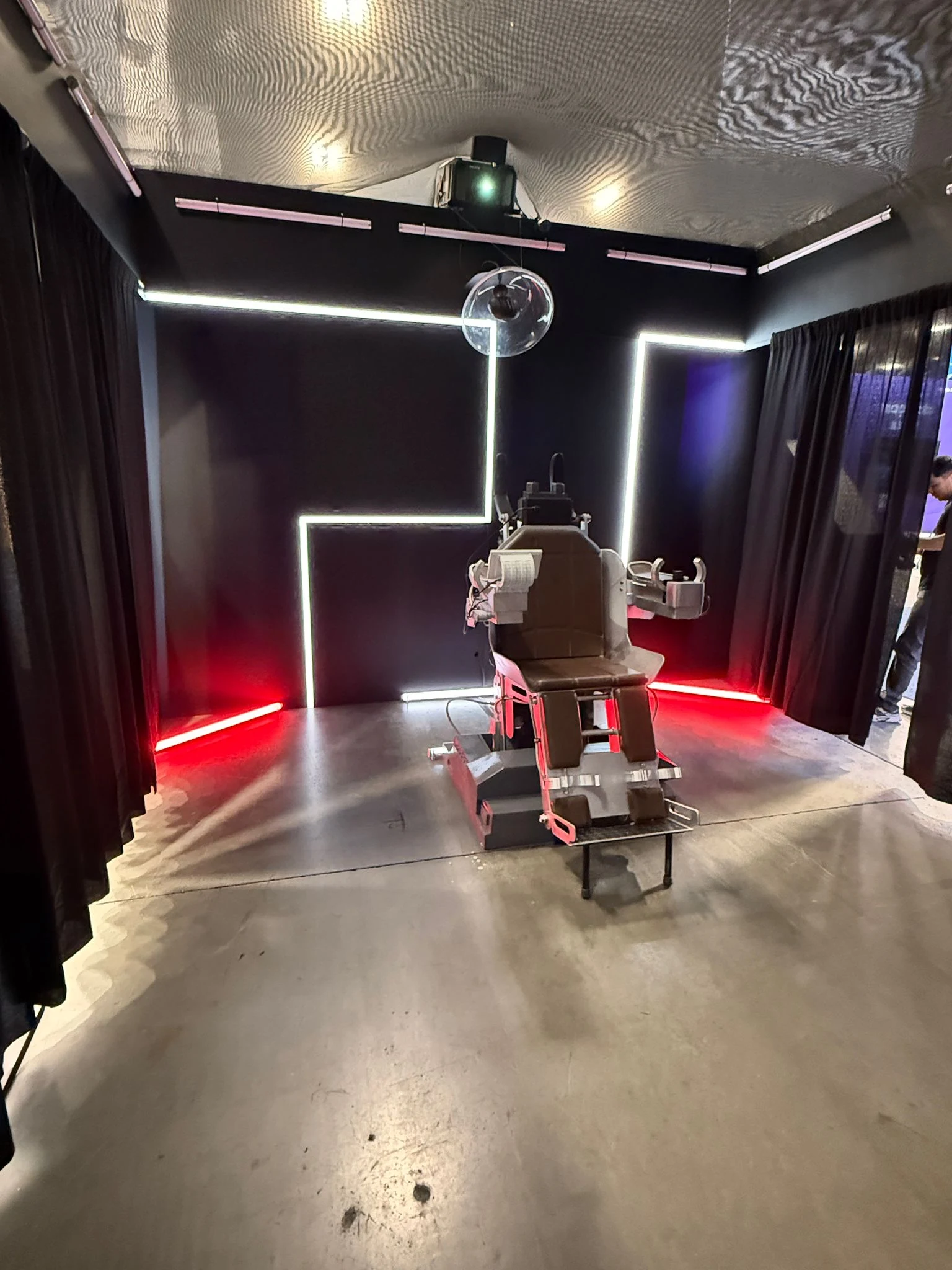
The booth exterior at CES
The booth exterior at CES
Register
An iPad outside the booth. Details, then a selfie with a live mesh confirming the framing.
Wait
Your evidence generates while you stand in line.
Get called
An operator confirms who you are and moves you to the front.
Watch the news
A broadcast plays on the wall. High-speed chase, stolen car, and the prime suspect is you.
Sit down
Ninety seconds on the clock. Three categories of evidence. Choose what to open.
Defend yourself
Every piece moves your innocence score. The AI narrates. The clock keeps running.
Verdict
Not guilty, or sentencing. Either way, the screen shows all six pieces of evidence built from your face.
Get your trailer
A cut of the real Mercy trailer with you in it, rendered for you alone, waiting in your inbox.
// NEXT CASE STUDY
AE Organizer// START HERE
TELL US WHAT
YOU'RE BUILDING.
Twenty minutes with a senior engineer, and you'll leave with how we'd build it, roughly what it takes, and what we'd worry about first. We read every message ourselves and reply within one business day.
A rough idea is enough to start.
That's in front of us now.
You'll hear back within one business day, from an engineer rather than a form letter. Nothing else needed on your end.
Or just email us at hello@queencity.io