INTERIOR AGENCY · 2021–2023 · SAAS PLATFORM
Interior Agency
The expensive part of design, handled before a designer says a word.
A startup wanted to offer high-end interior design at a price that didn't need a high-end budget. That meant removing the hours a designer spends pulling taste out of a client by hand. We built the software that does it instead.
// 01 · THE SITUATION
Good design is expensive before it even starts.
Two founders had a plan to sell high-end interior design without the high-end price. The math only worked if they could cut the most expensive part of the job, and the most expensive part happens before any design does.
It's the discovery. The hours a designer spends on calls and emails pulling a taste out of a client who can't quite name it. What they like, what they'd never live with, the colors, the budget, the room. All of it extracted by hand, one conversation at a time, before a single real decision gets made. Do that for every lead and the economics of affordable design fall apart.
So they came to us with the harder version of the idea: have the software do the extraction. A client answers a style quiz, and by the end the business already knows who they are and what they want, without a designer spending an hour to find out.
Then the project grew. What started as a quiz became the whole pipeline: the lead, the follow-up, the client account, the project intake for six kinds of work, the moodboard a designer sends for approval, and the status board tracking every job from first answer to delivered.
// 02 · WHAT WE BUILT
A quiz at the front. A working design business behind it.
It learns what someone likes without asking them to explain it.
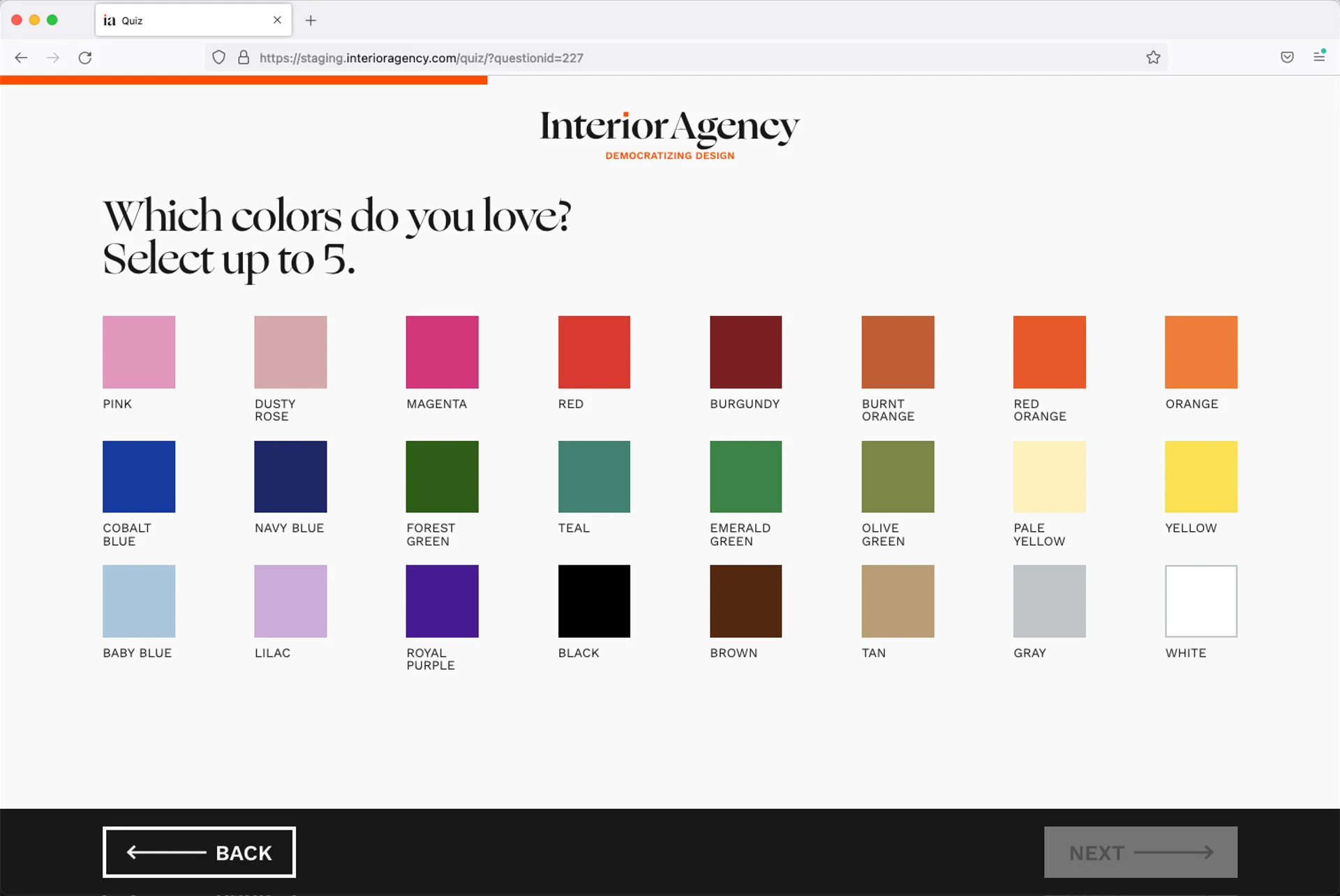
Most people can't describe their own taste. They know it when they see it. So the quiz doesn't ask them to explain, it shows them things and watches what they pick.
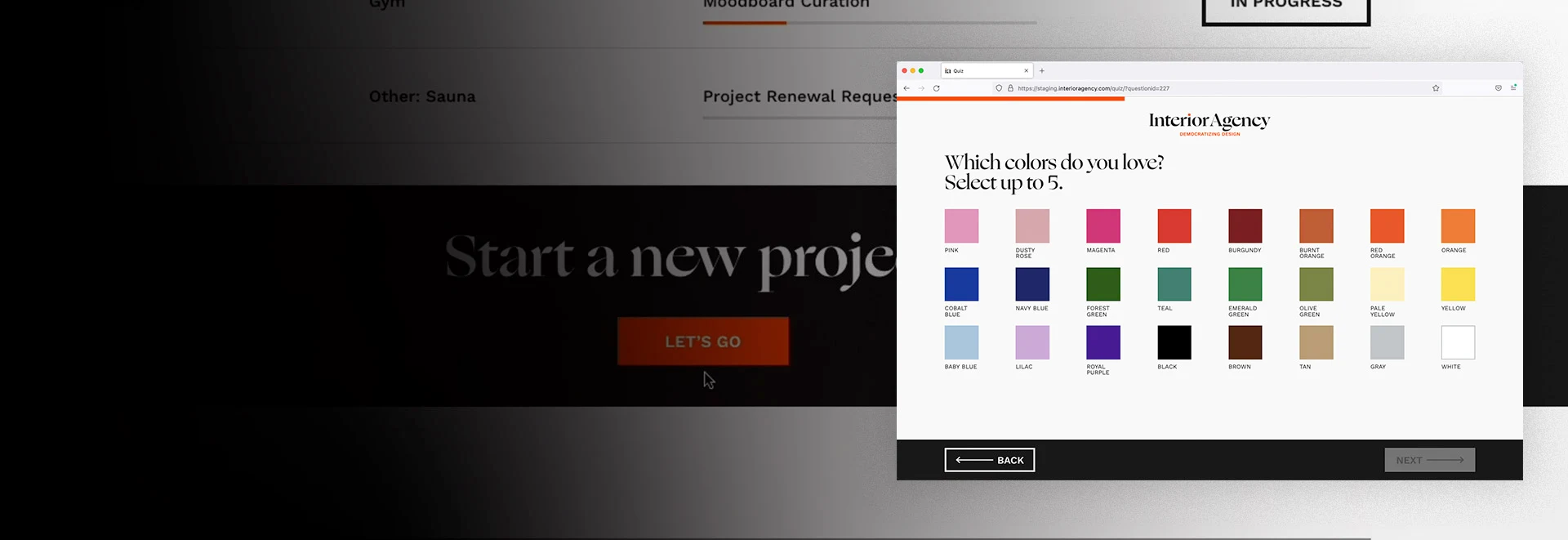
Color swatches, room images, a few written answers. Behind each question is real logic: a minimum and maximum number of picks, a "none of these" option that clears the rest, and rules that drop an answer from a later question if you already ruled it out earlier, so nobody gets asked something that no longer applies to them.
It remembers where you were, too. Close the tab and come back and the quiz resumes where you left off. Come back by email days later and it finds your record instead of starting you over. By the end, the business has a style profile it would have taken a designer an hour on the phone to build.
Every quiz-taker becomes a lead the designer can actually work.
A finished quiz isn't just answers sitting in an inbox. It's a lead with a status, moving through a defined path: incomplete, pending, replied, engaged, complete.
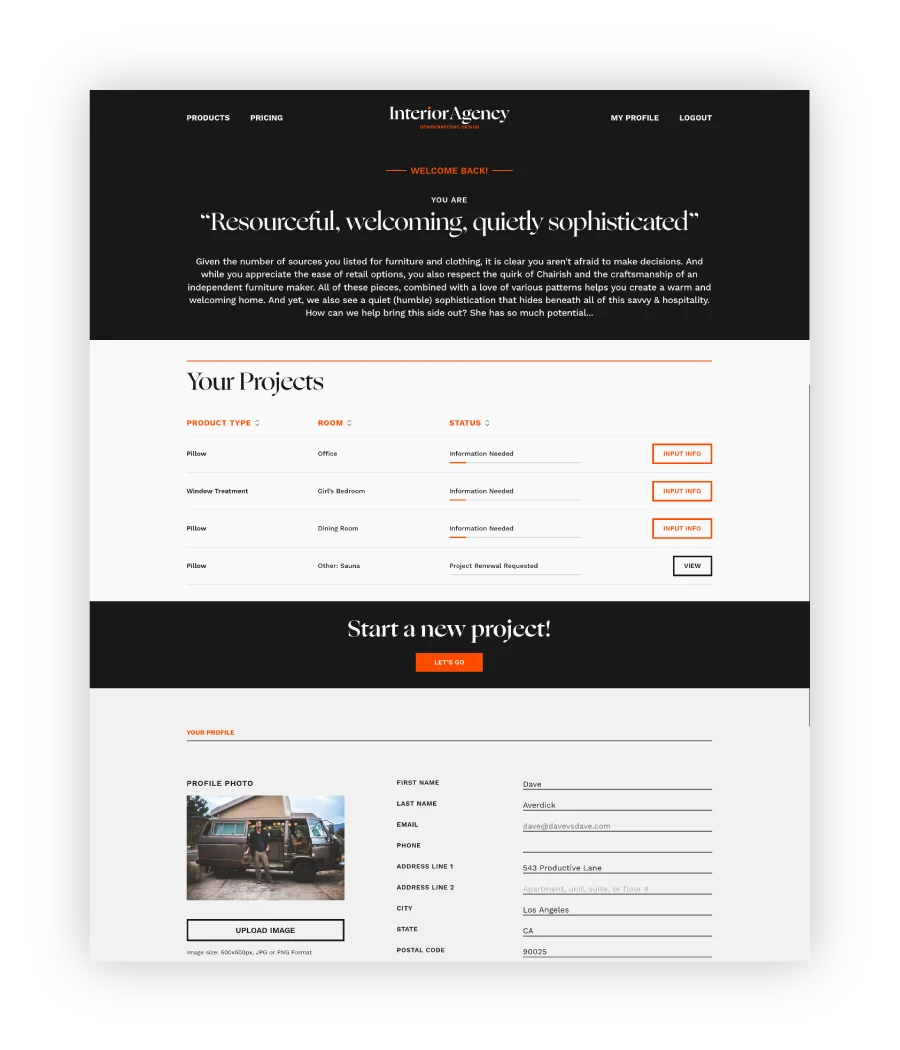
The designer reads someone's answers, writes them a style headline and description, and one click turns that lead into a real client account, generates a password, and emails them a link to their results. When they log in, the system moves them to "engaged" on its own. The designer manages the whole thing from an admin built for this business: search, filters, per-question breakdowns of what everyone's answering, purchase history, and a CSV export for the rest.
Six kinds of work, each with the questions that fit it.
Once someone's a client, they start a project, and a pillow is not a paint consultation. So each of the six project types (window treatments, reupholstery, pillows, wallcovering, cushions, paint) has its own set of questions.
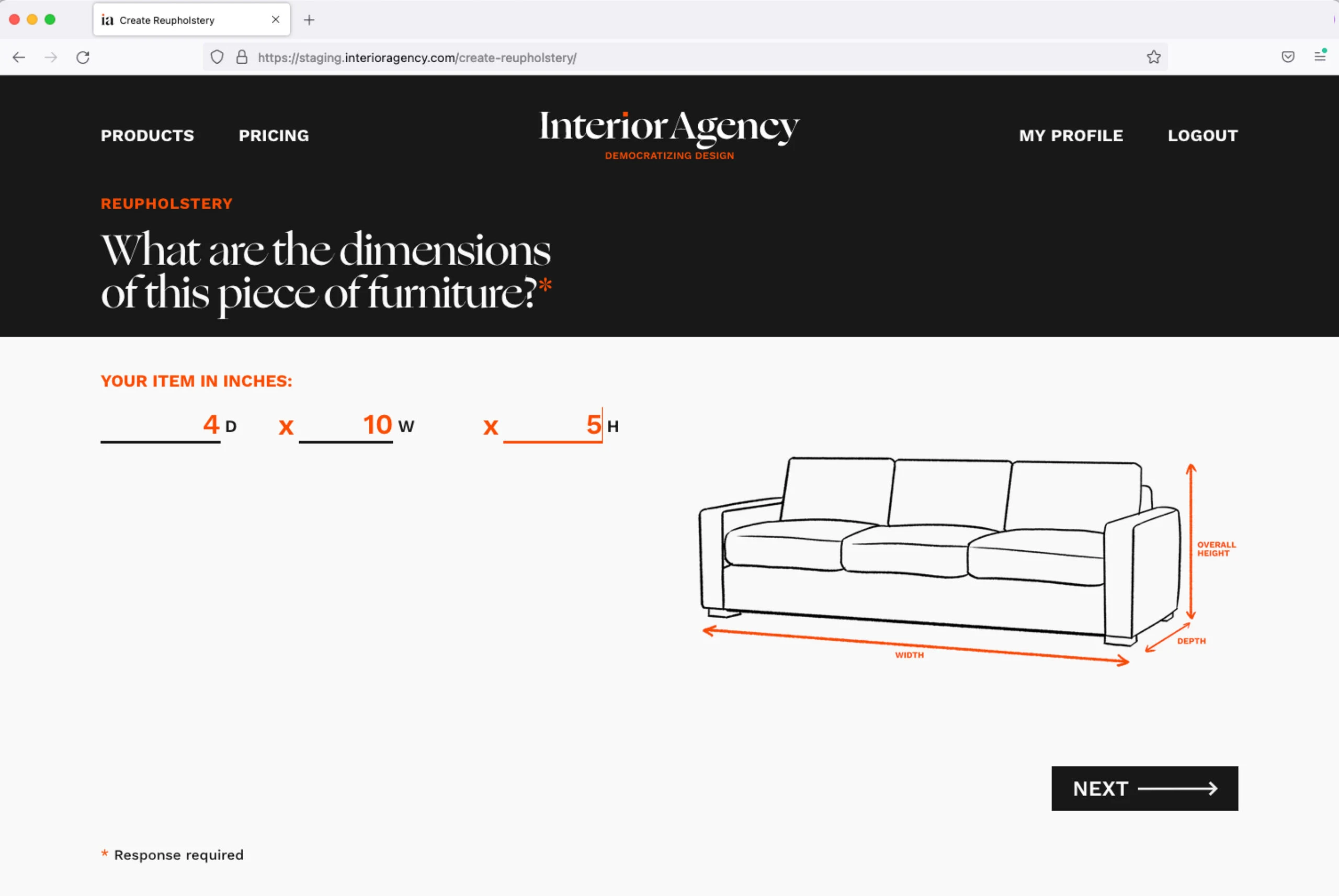
Some ask for measurements with a diagram showing how to take them. Some ask for a budget. Some collect photos of the actual room, including from a phone camera on the spot. A wallpaper project runs a roll calculator. The client answers what's relevant to their job and nothing that isn't, and all of it lands as structured data the designer can act on.
The back-and-forth of approval, moved online.
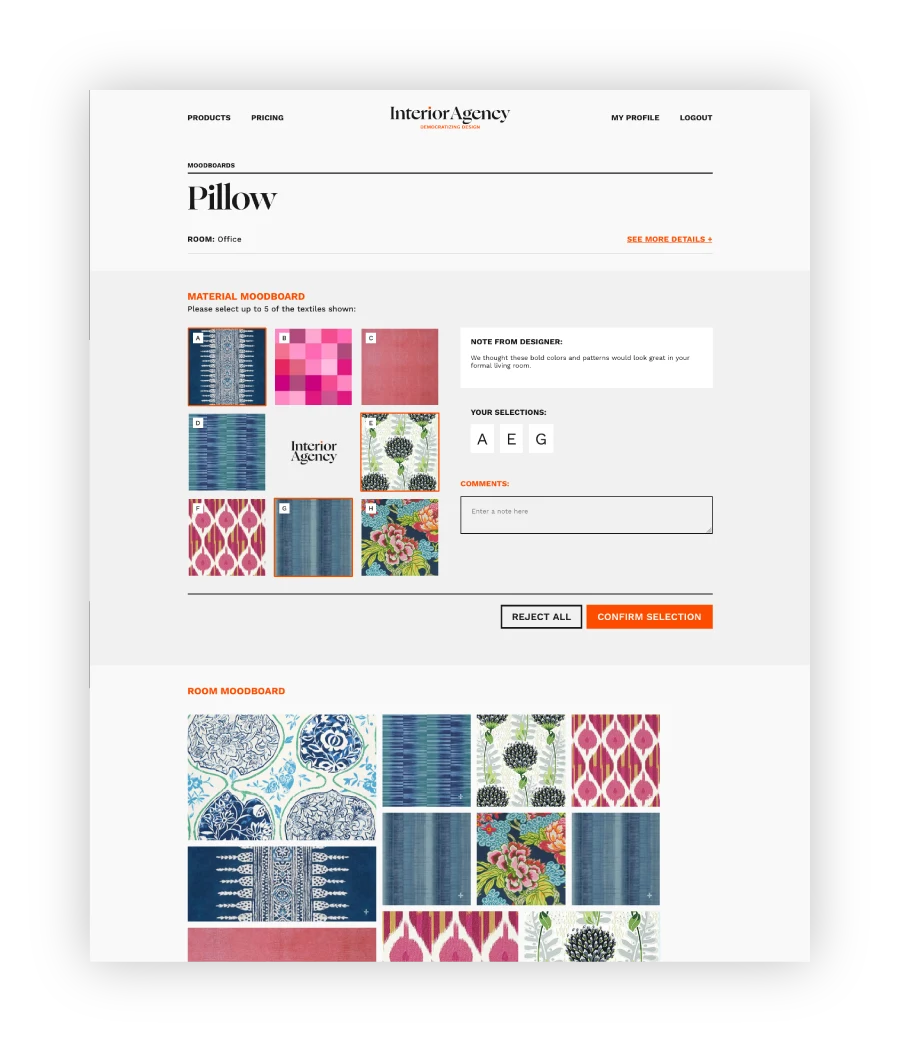
This is the part that's usually a mess of email attachments. The designer builds a moodboard of materials and sends it. The client opens it, looks through the options in a gallery, picks the ones they want, adds a note, and accepts or rejects, all in one place.
Accept, and the project moves forward and the designer is notified. Reject, and it goes back a step with the client's note attached, so the designer knows why. Every project then moves along a status timeline the client can watch, from information needed through to delivered, so nobody has to email asking where things stand.
// 03 · THE HARD PART
The quiz had to stay correct when people changed their minds.
The quiz needed to change constantly, because the business was still learning which questions actually predicted someone's style. So none of it is hardcoded. Every question is a record the designer can rewrite, reorder, or replace, with the rules living alongside it: how many picks are allowed, whether one answer clears the others, and which answers to carry forward.
That last rule is where it got hard. A question like "which colors would you never use" can reach into a later question and remove those colors from it, so nobody is ever asked to choose something they already ruled out. Simple enough going forward. The problem is that people go back.
Someone answers "never orange," moves ahead three questions where orange has already been stripped out, then returns and changes their mind. Now every downstream question has to reconsider itself, live, against the new answer. Remove what's newly excluded, put back what no longer is, and never lose an answer the person already gave along the way. The quiz recomputes on every change rather than only moving forward, which is the difference between a form and something that behaves.
None of that shows. From the client's side it's a smooth quiz that simply never asks a foolish question. That invisibility is the point, and it's also what let the designer rewrite the whole quiz whenever the business learned something new, without a developer and without breaking the reporting, because the analytics group by question rather than by position.
“DaveVSDave was instrumental in helping my co-founder and I conceptualize, design and bring to life our vision for a completely new web-based interior decor service. The thoughtful service helped us navigate our way through several complex iterations.”
— Kim Mancini, Co-Founder, Interior Agency
// 04 · THE STACK
Why these choices.
Django, because the front end was the small part. A style quiz looks like the product, but the product is the pipeline behind it: leads, accounts, projects, moodboards, and the rules connecting them. That's a data model with a lot of moving parts and a lot of state, which is exactly what Django is built to hold, and building on it meant the admin the designer runs the business from came largely for free.
Leads and clients are separate on purpose. A quiz-taker isn't an account, they're a lightweight record, until the designer decides to make them one. That keeps thousands of half-finished quizzes out of the real client list, and it's what lets a lead sit in a pipeline before it ever becomes a login.
The designer authors the quiz, not a developer. Questions, answers, rules, and order are all data the client controls, inside guardrails that let them change everything about a question without being able to break the page it lives on. The quiz could be rewritten as often as the business learned something, and it was.
Answers are stored as structured data, not prose. Every project's answers are saved in a form the system can read back, which is what lets them populate the designer's dashboard, drive the client's status page, and stay sortable even as the questions change.
// 05 · THE GALLERY
The client's side, and the designer's.
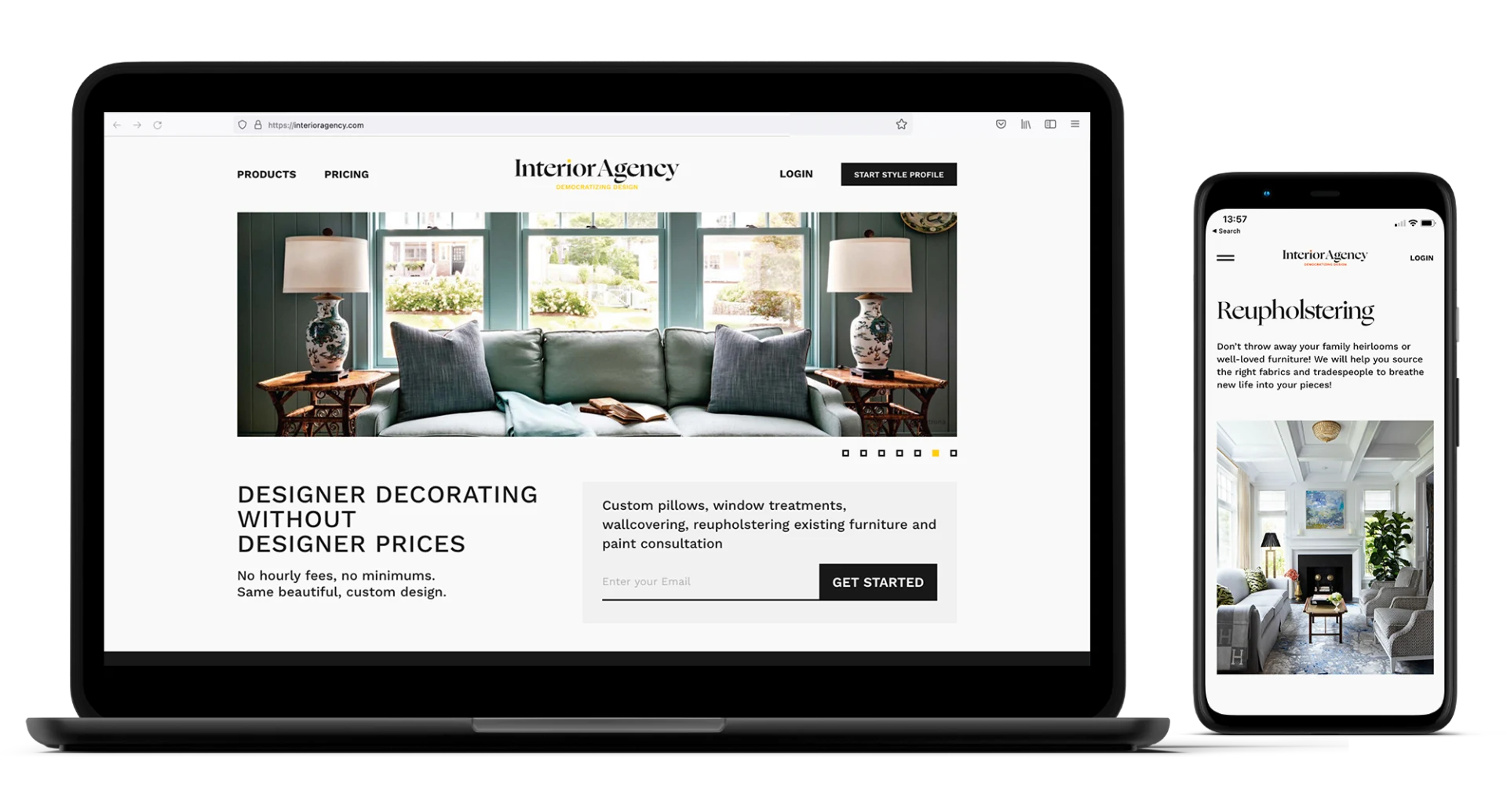
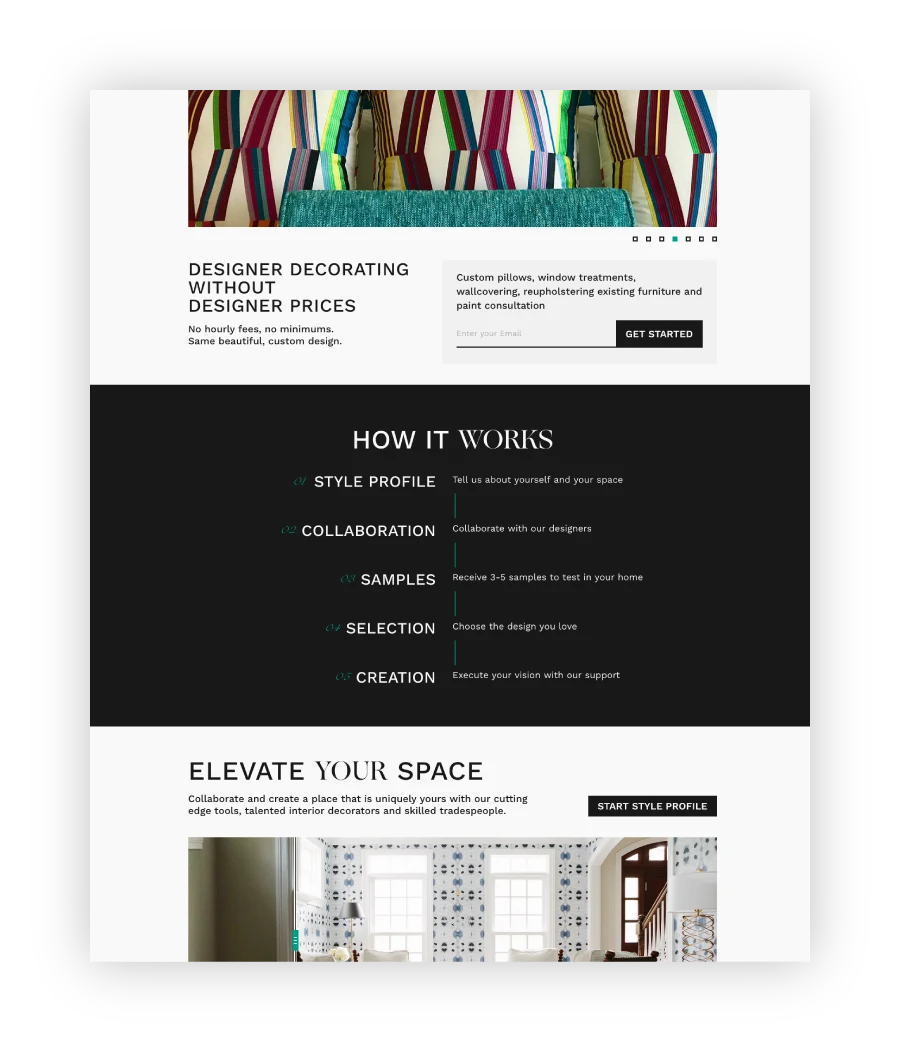
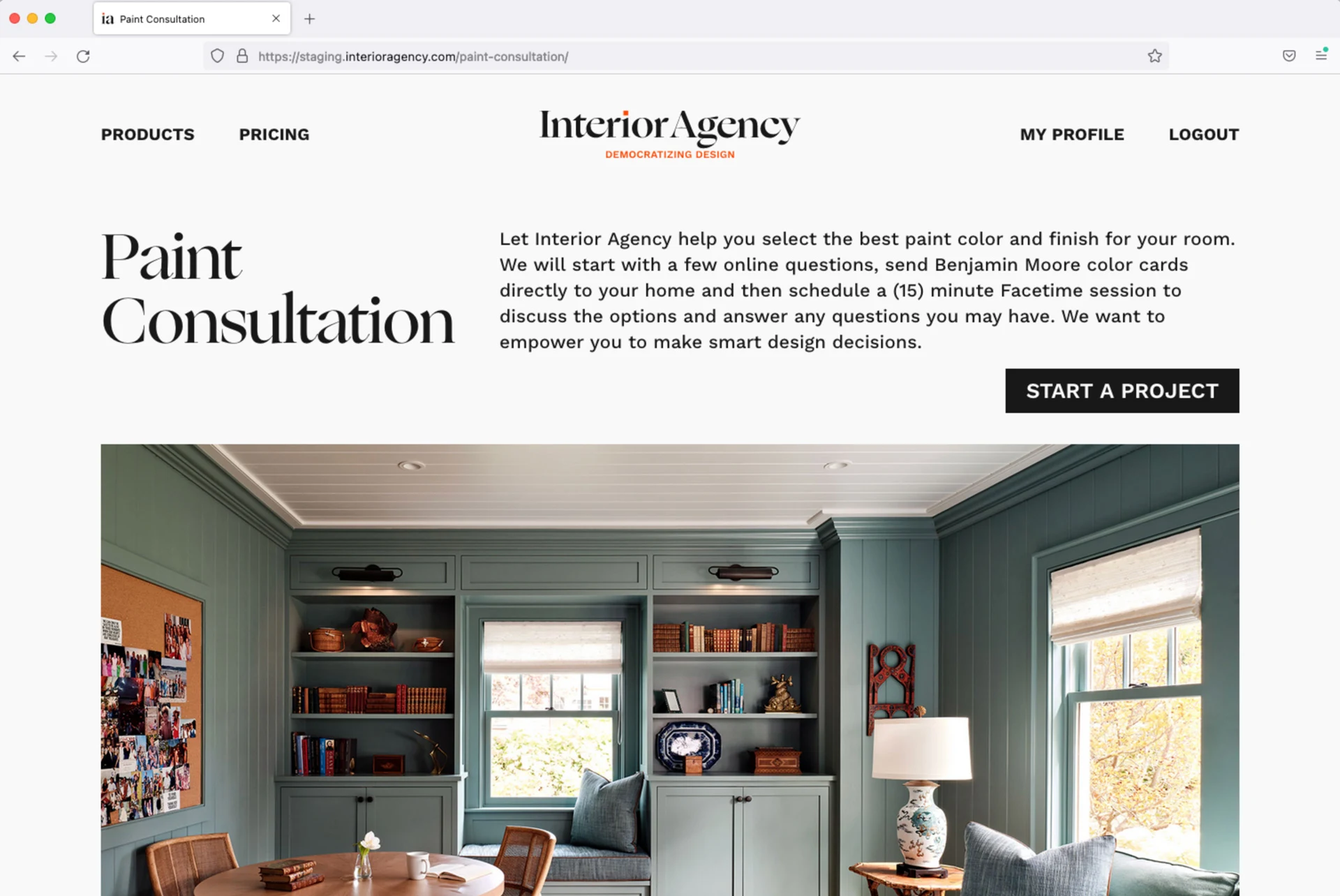
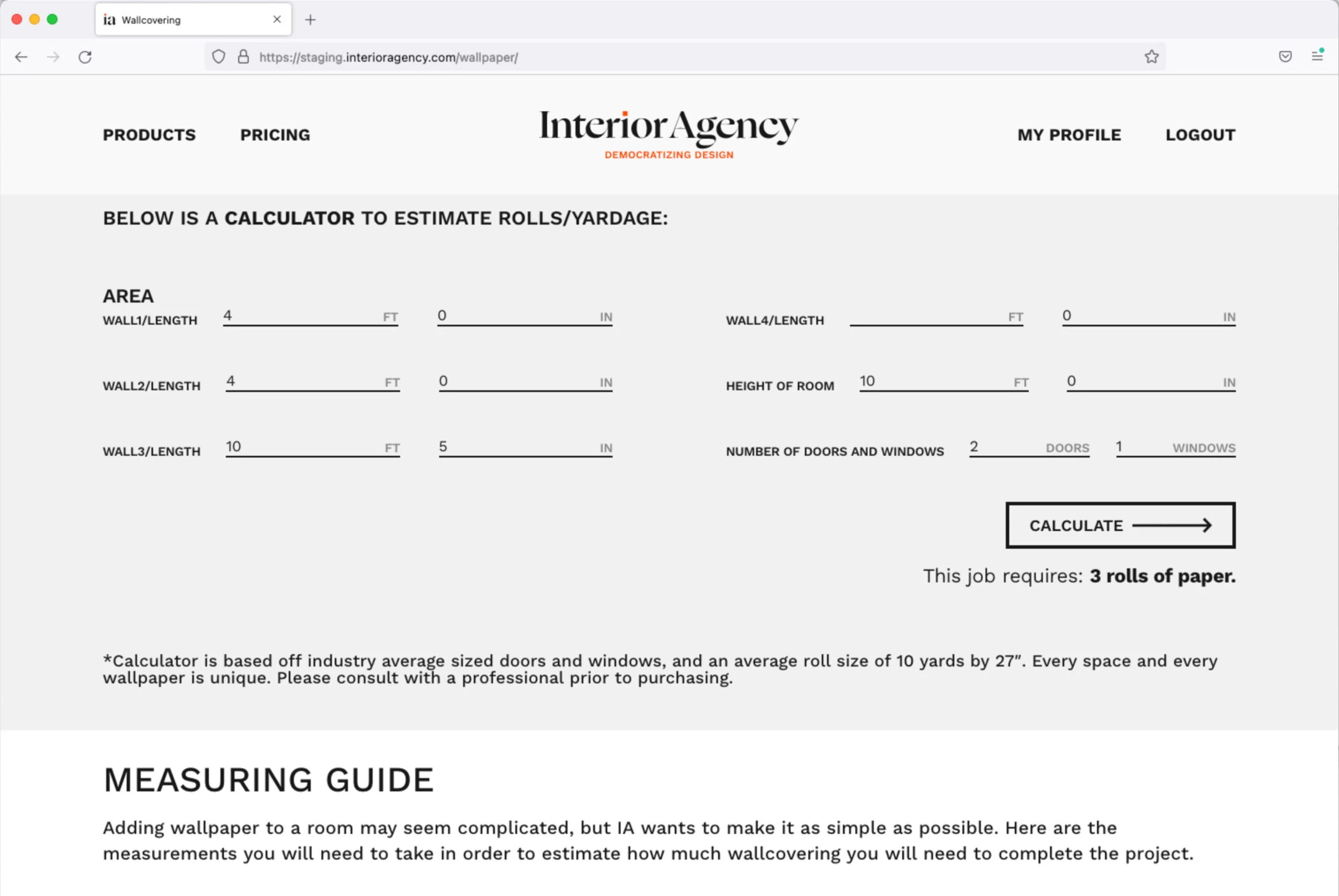
The site on desktop and mobile
The site on desktop and mobile
// NEXT CASE STUDY
Hedge// START HERE
TELL US WHAT
YOU'RE BUILDING.
Twenty minutes with a senior engineer, and you'll leave with how we'd build it, roughly what it takes, and what we'd worry about first. We read every message ourselves and reply within one business day.
A rough idea is enough to start.
That's in front of us now.
You'll hear back within one business day, from an engineer rather than a form letter. Nothing else needed on your end.
Or just email us at hello@queencity.io