LIONSGATE · 2025 · CAMPAIGN PLATFORM
Ruska Roma
5 of 6 finished signing up.
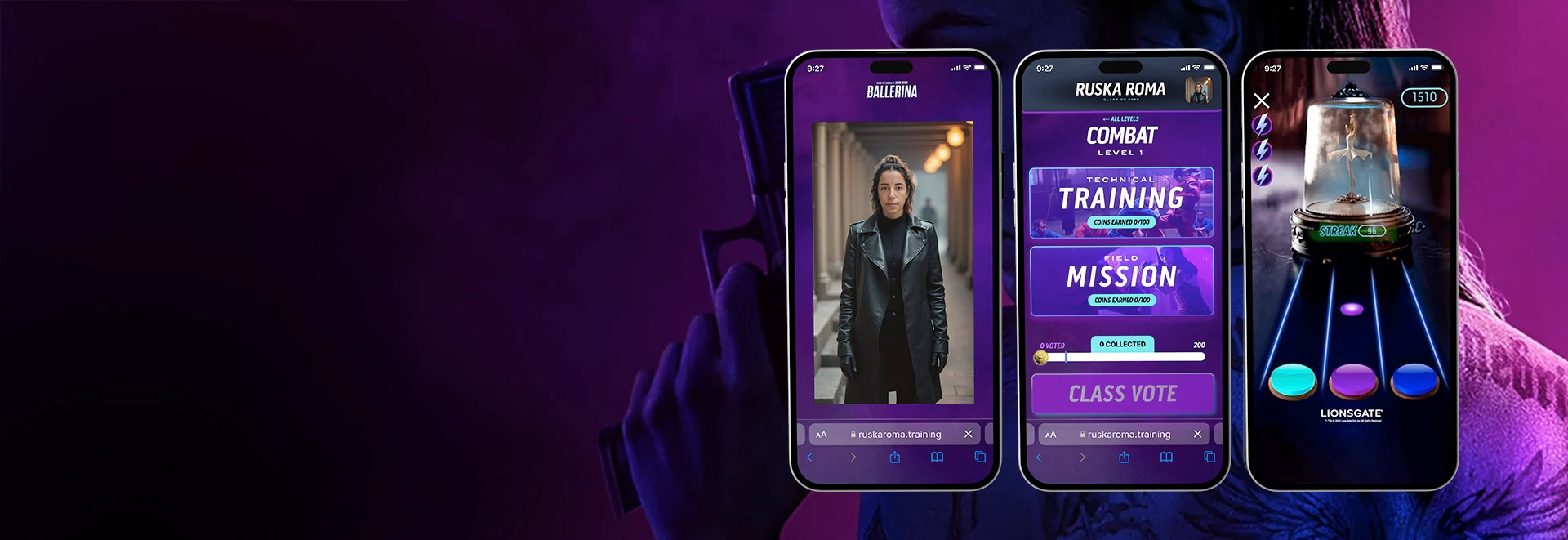
A four-week competition for the John Wick universe, built for Lionsgate's Ballerina launch. Upload a selfie, get an AI-rendered version of yourself as an assassin, and compete for a trip to the premiere.
// 01 · THE SITUATION
A studio pointed everything at one URL.
Lionsgate was launching Ballerina into the John Wick universe, and they put real paid-media weight behind a single destination: influencers, the franchise's own fan list, and the film's star all pushing the same link to their followers. Everyone landed in the same place, ruskaroma.training, to train as an assassin and compete for a trip to the premiere.
That put studio-scale traffic on one site in bursts: tens of thousands of people arriving within minutes of a post going up, at any hour, across a campaign that ran live for four weeks. We built the platform for exactly that, to absorb sharp, unpredictable spikes and keep every player's score, coins, and standing correct while the crowd surged. It held for the full month.
// 02 · WHAT WE BUILT
Everything except the games.
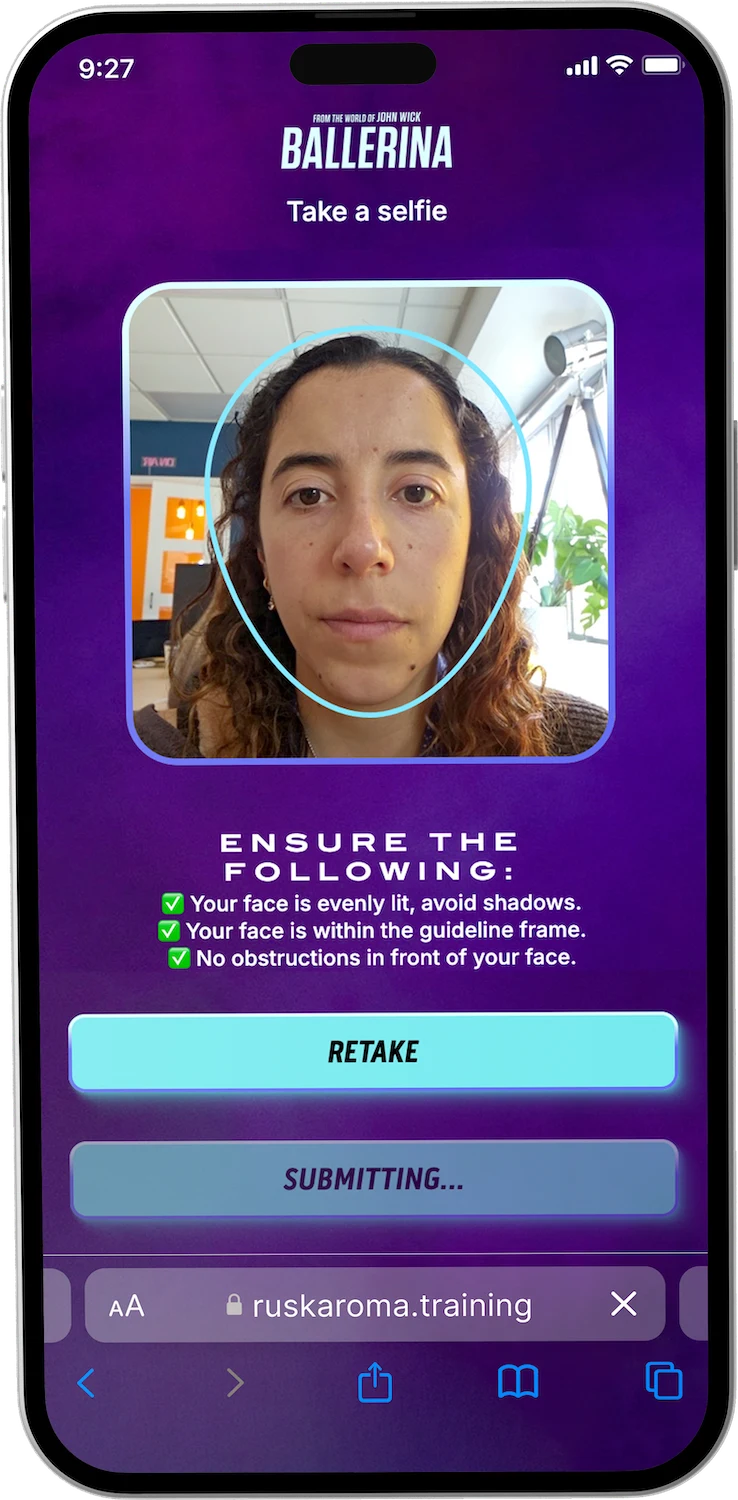
A selfie in. An assassin out.
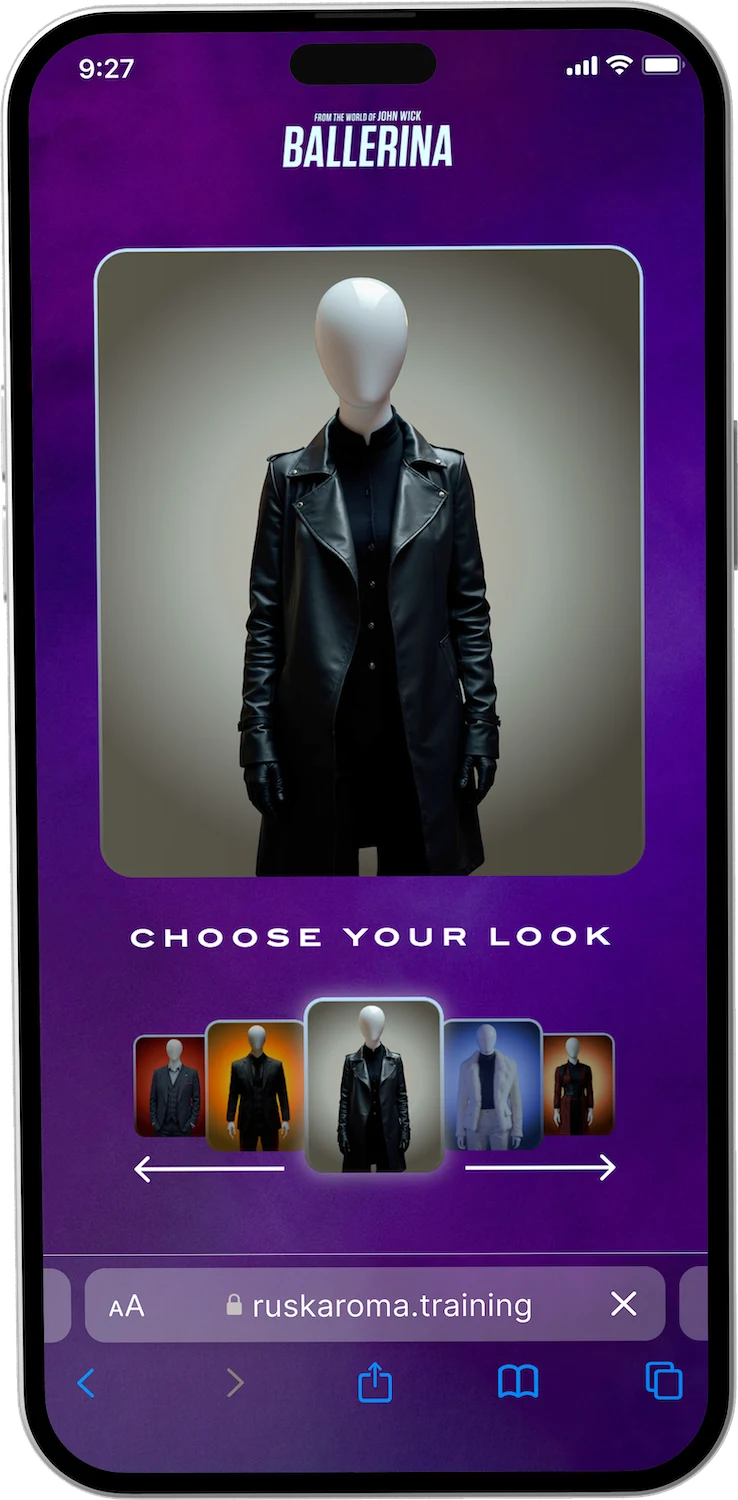
Most campaign signups end with a confirmation email. This one ended with a picture of you, rendered into the world of the film as the character you chose.
And that first selfie kept paying off. Clear a level and it came back as a new avatar themed to what you'd just done, added to a gallery of everything you'd earned. One photo, rendered a dozen ways across four weeks, which is why validating the capture up front mattered so much: a bad one wouldn't fail once, it would fail every time. The thing that got people in the door kept pulling them back.
See the selfie capture, face guide active↓Games from three vendors, and a player never knew.
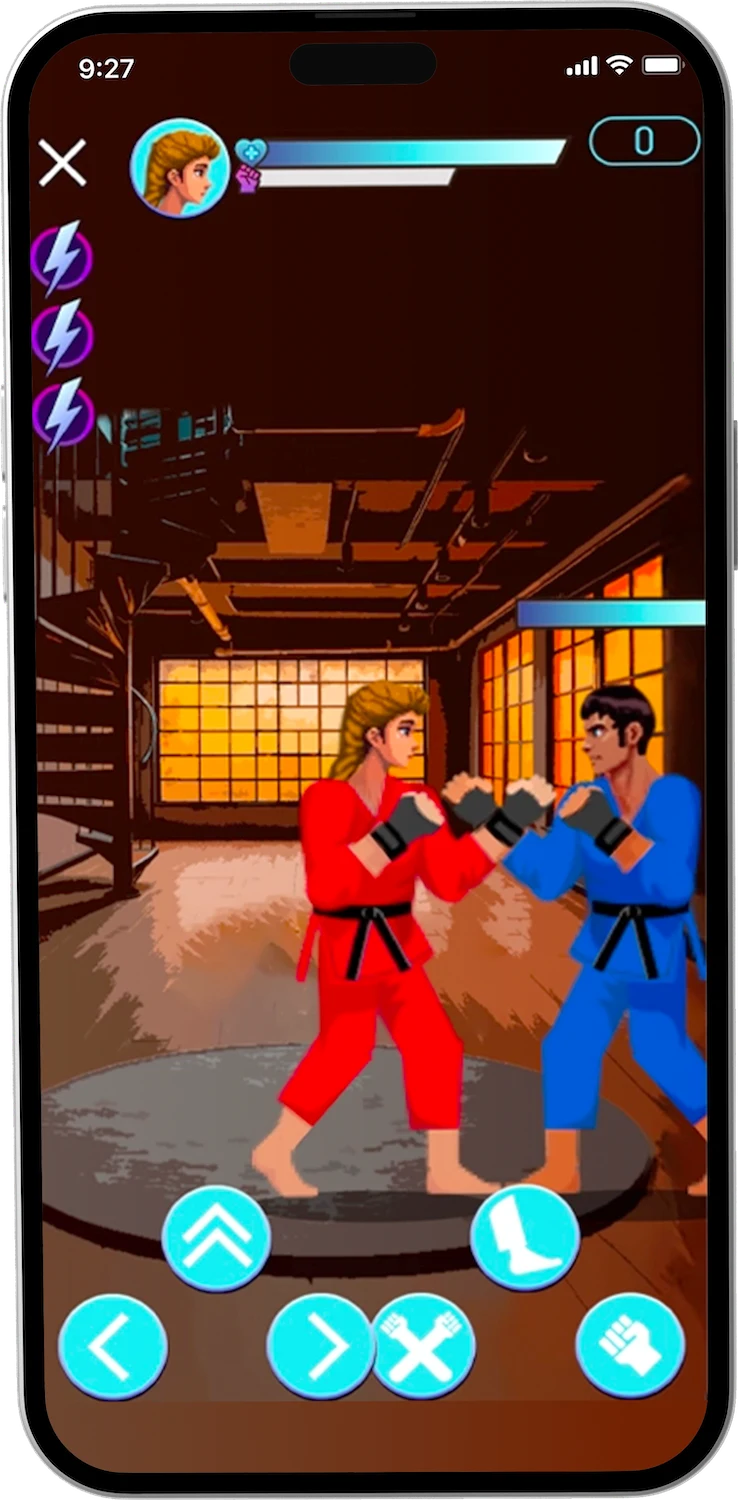
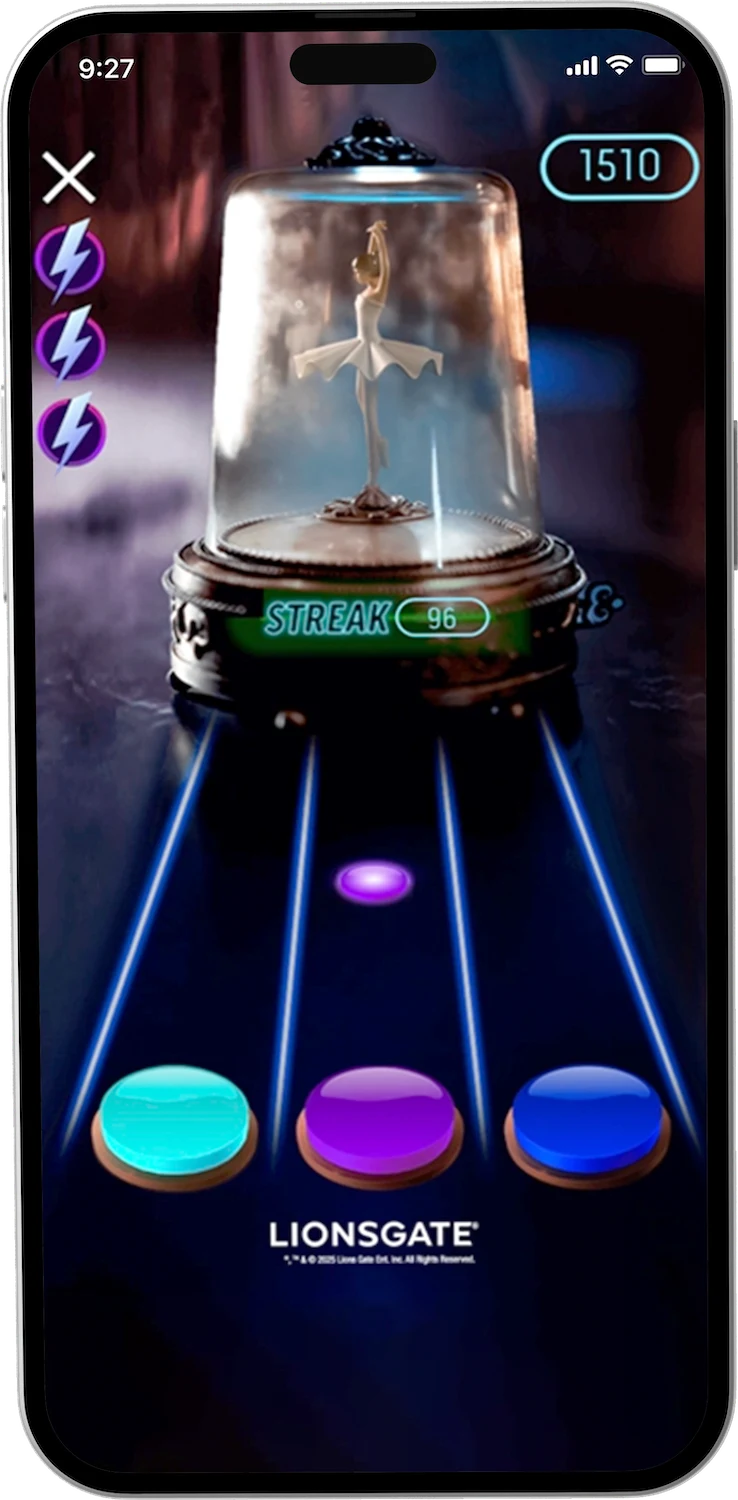
The four games and the AR experience came from three outside studios, two in England and one in Japan, on different engines and schedules, with time zones spanning as much as fourteen hours end to end. Each needed a way to report a player's score into a competition that was already live.
We wrote the single API all three built against, then hosted their finished games ourselves, so a player arrived already signed in, played, and watched their score land in their own account without ever leaving the site. Three studios' work, and from a player's side it was one seamless place.
See a partner studio's game running inside the competition↓A web game and a real-world hunt, feeding the same standing.
The campaign lived in two places at once. On screen, weekly games where your score climbed the longer you survived. Out in the real world, an augmented-reality hunt that grew week by week, with safe houses to find and rare collectibles you could not get any other way.
They looked like two separate products. Underneath they were one. Every player had a single account and a single coin balance, and both worlds paid into it: coins from a web game and coins from the street were the same coins, spent the same way, on votes for one of six competing influencers and entries into the weekly draw. However someone spent their four weeks, on the couch or out walking, they were playing one competition, not two things bolted together.
See the AR coin hunt out in the real world↓A weekly prize draw that never saw a name.
A prize draw attached to a studio campaign has to be provably fair, so we built it to be blind by construction. Clearing a level entered you in that week's raffle. When the draw ran, what left our system was a list of anonymous IDs, no names and no contact details, handed to an independent contest-compliance vendor who picked the winners. Only then was a real identity reattached and the winner contacted, with a 48-hour window before the prize rolled to the next place.
Personal data never touched the selection. If anyone ever asked whether the draw was straight, the answer was built into how it worked, not a promise after the fact.
// 03 · THE HARD PART
The hard part wasn't any one system. It was all of them at once.
Most projects have a single hardest thing. This one had a dozen, and they all had to work together, in public, at the same time.
Count them. AI avatars generating from selfies. Four games from three studios reporting into one score. An AR layer out in the physical world. A live leaderboard that had to be right every second. A coin economy feeding both influencer voting and a prize draw. A new avatar unlocking at each level. Emails and push notifications firing to tens of thousands of people at once. A weekly content release on a timer. And a prize operation with legal obligations riding on it.
We delivered every single one of these and each one worked during the 4 week campaign.
// 04 · THE NUMBERS
Four weeks at full push.
21,000+
players over four weeks
16,891
AI avatars generated
159,842
votes cast across the campaign
// 05 · THE STACK
Why these choices.
Django, because the campaign needed two different things fast. An admin the client could run content and reports from on day one, and a documented API by week two so three outside studios could start building against it.
Everything a player owns lives on their account. Avatars, coins, and progress sit on the player record itself rather than in side tables kept in step with it. When the whole product is one number going up, that number should live with the person it belongs to.
One place holds the whole campaign's state, and everything else reads from it rather than deciding on its own. A level opening, a scheduled content drop, a rules change for the new week: each became a change in one place that every system followed, with no downtime and nobody's progress moving under them. It's what let the rules change weekly without a rebuild, and why the site could behave differently in week four than in week one.
Everything slow runs in the background. Avatar generation takes time, and so does notifying tens of thousands of people at once. A player never waits on either, and neither can take the site down when traffic spikes.
Push notifications, not just email. A level opens Monday, a reminder lands Thursday, the draw closes Sunday, and it starts again. For a campaign whose whole life is the return visit, native web push is the difference between a player remembering and a player missing a week.
Uploads and public assets never share an access policy. A player's selfie and a public campaign image live in separate storage with separate permissions, decided before either one existed.
// 06 · THE GALLERY
Inside the platform.
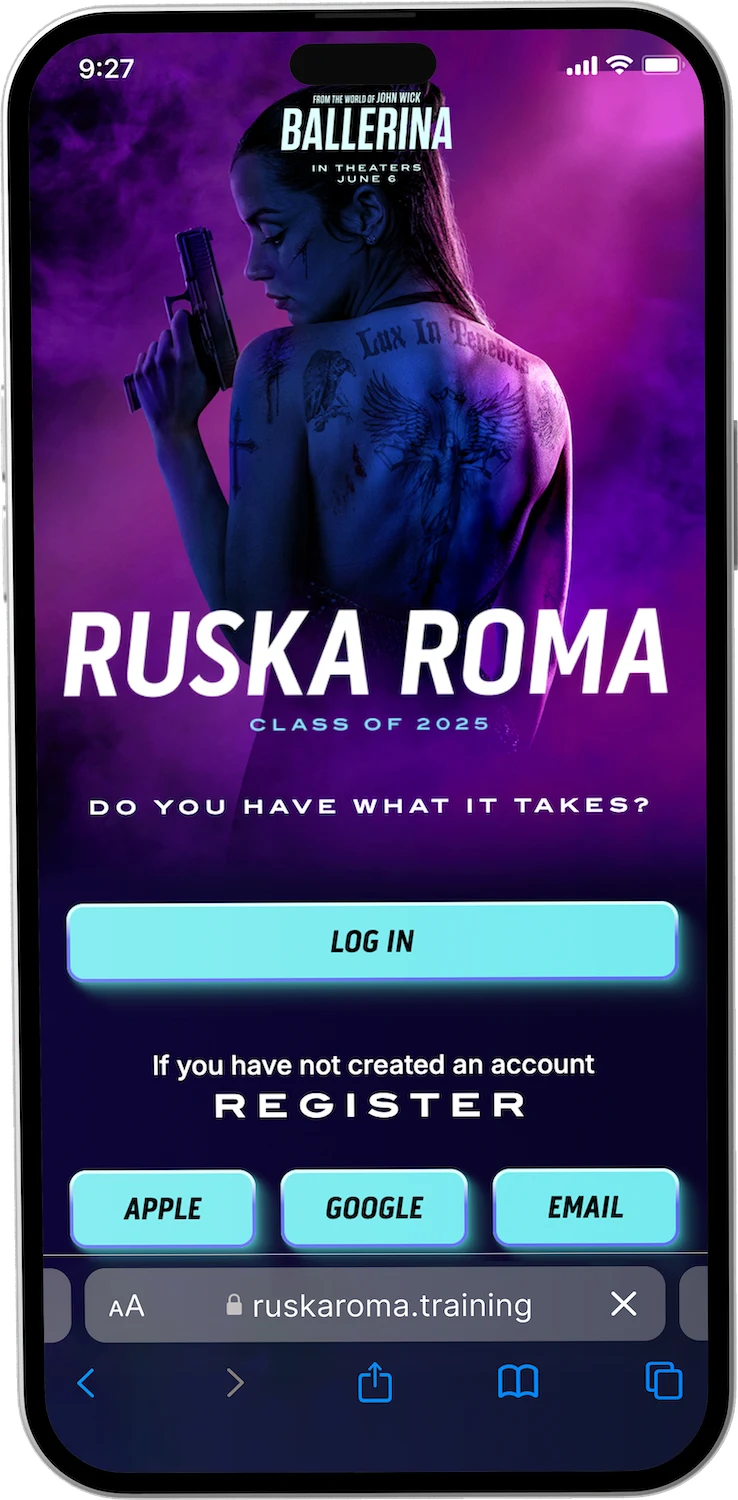
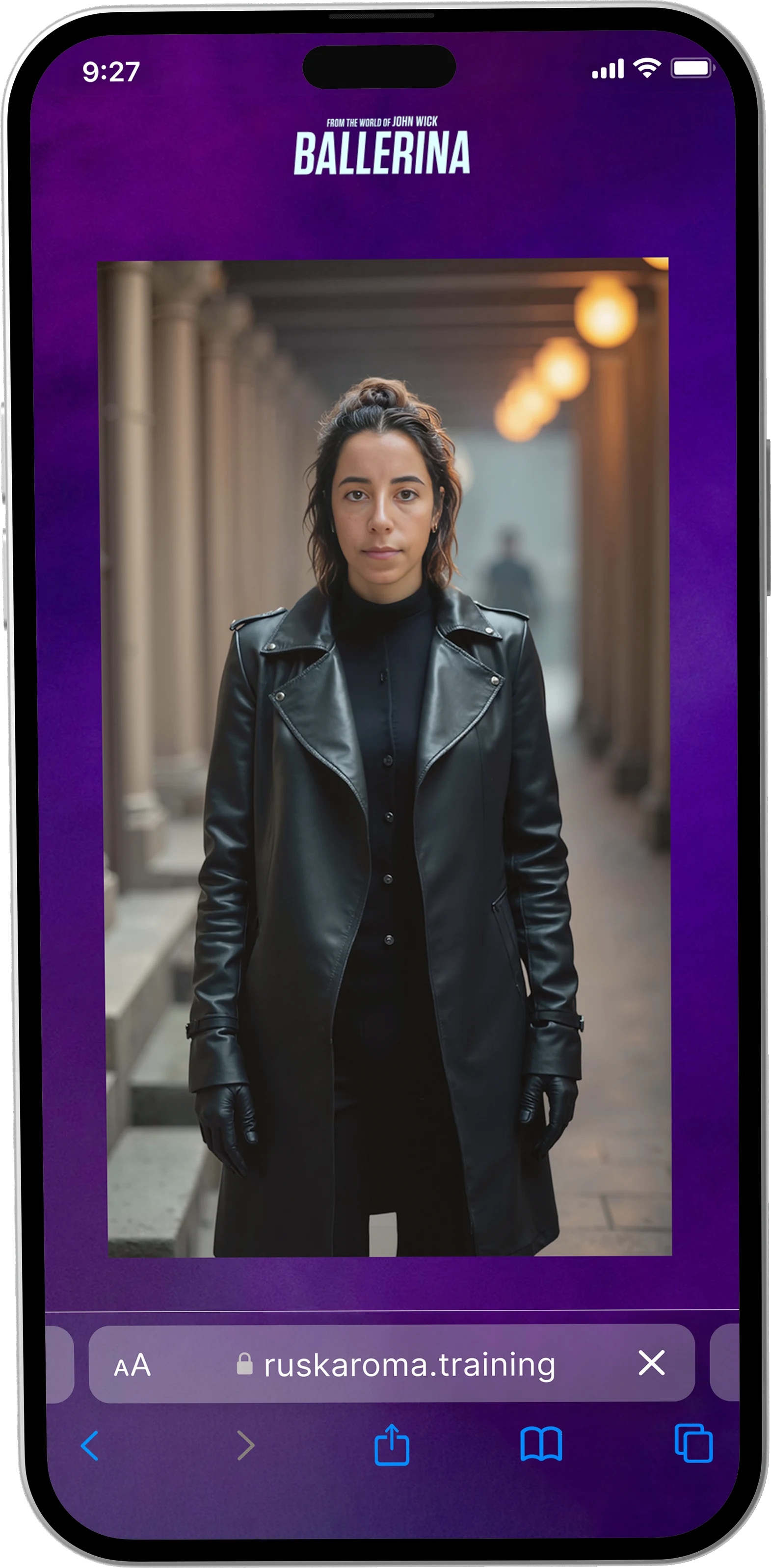
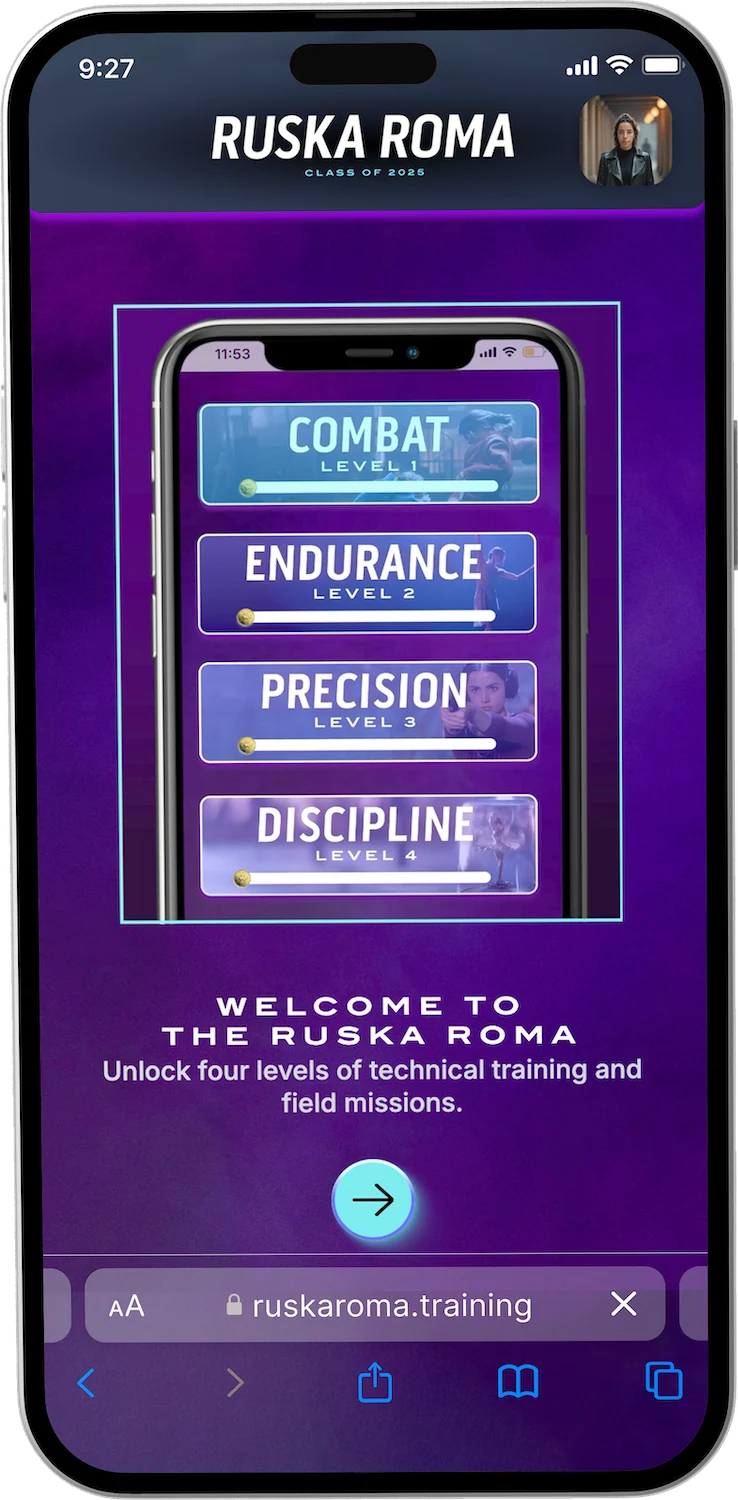
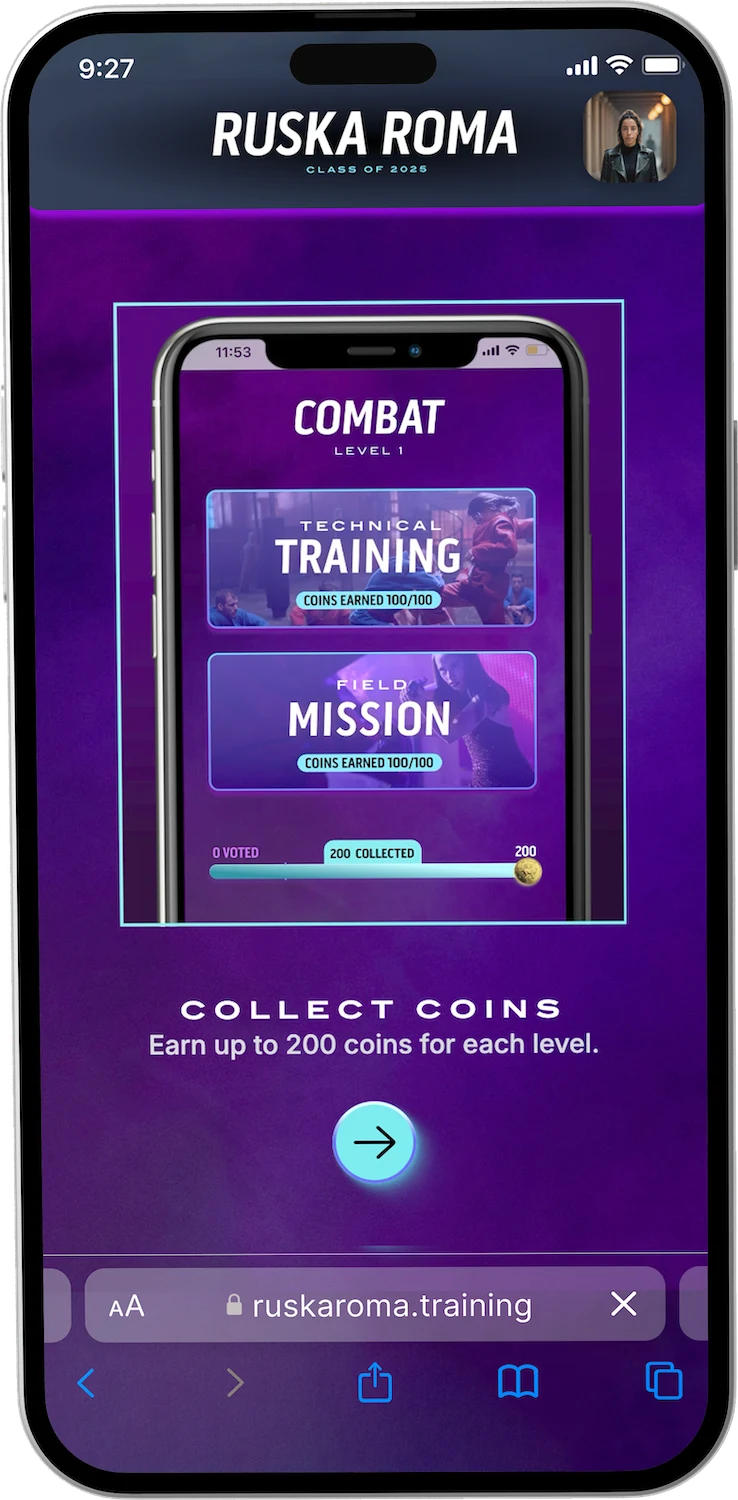
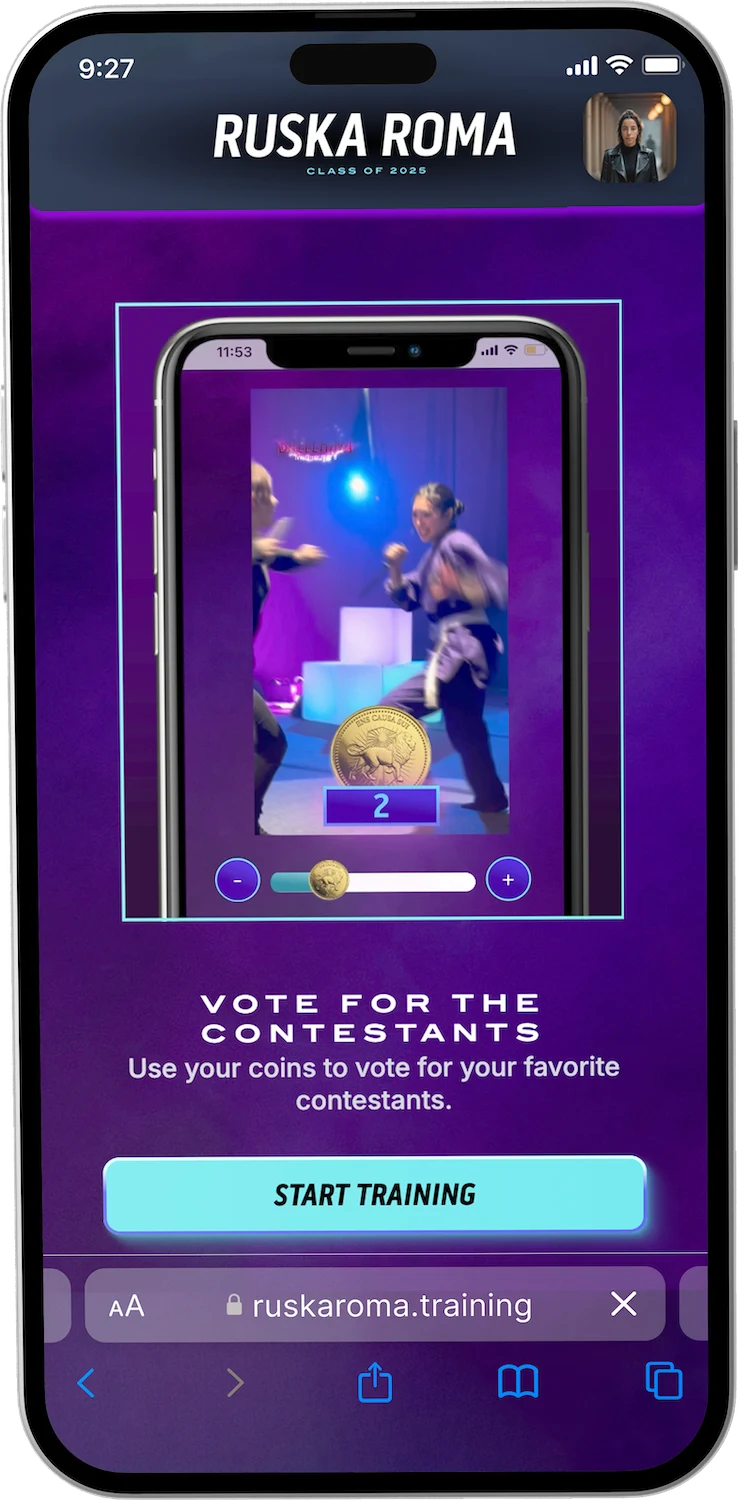
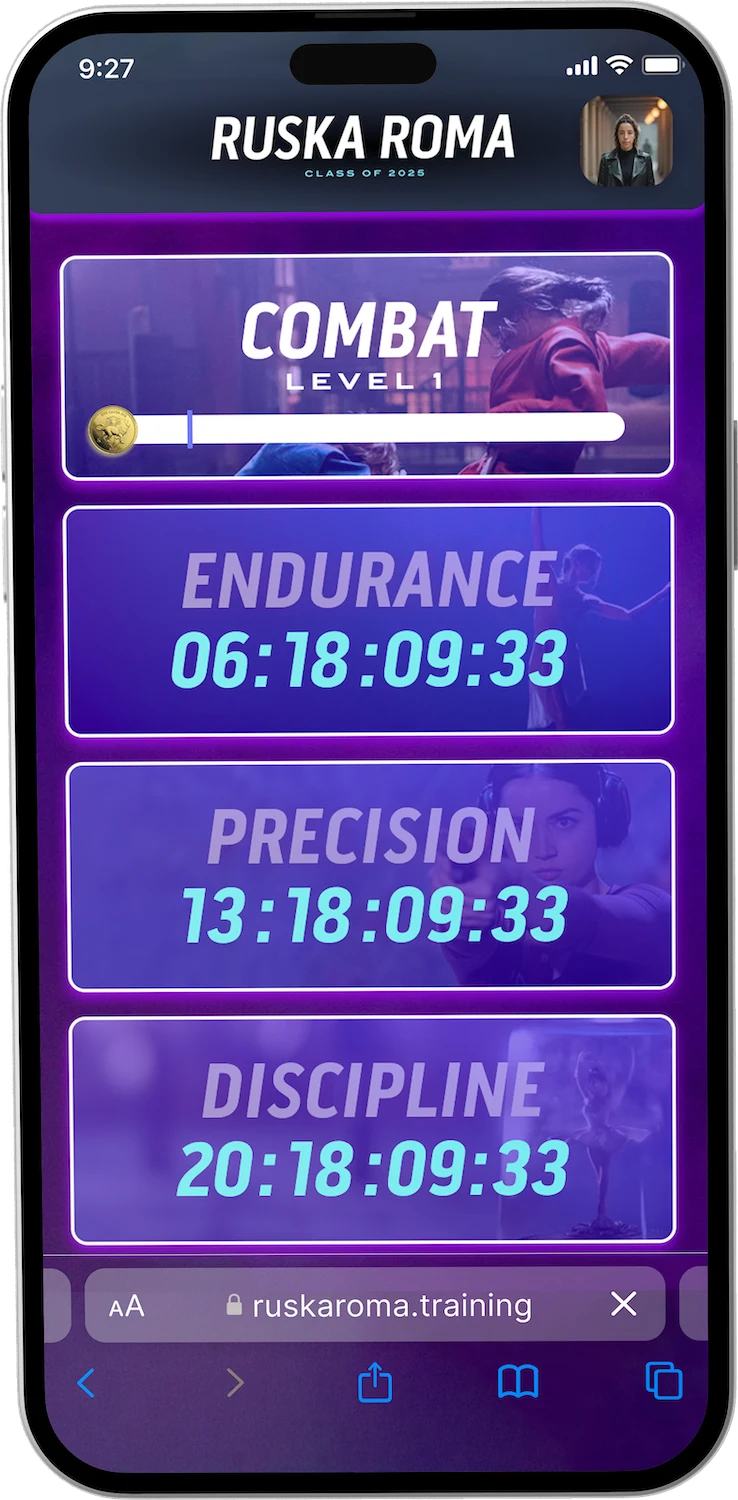
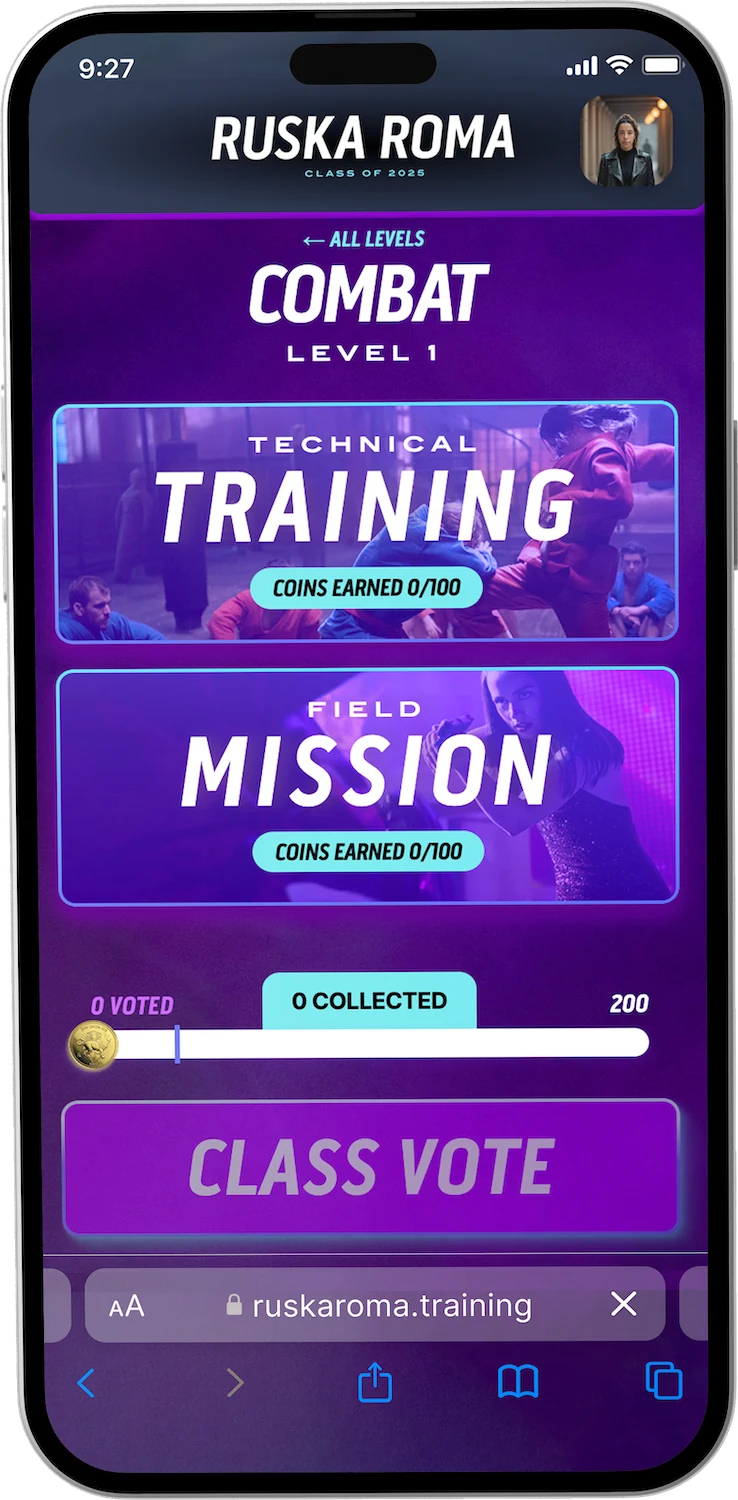
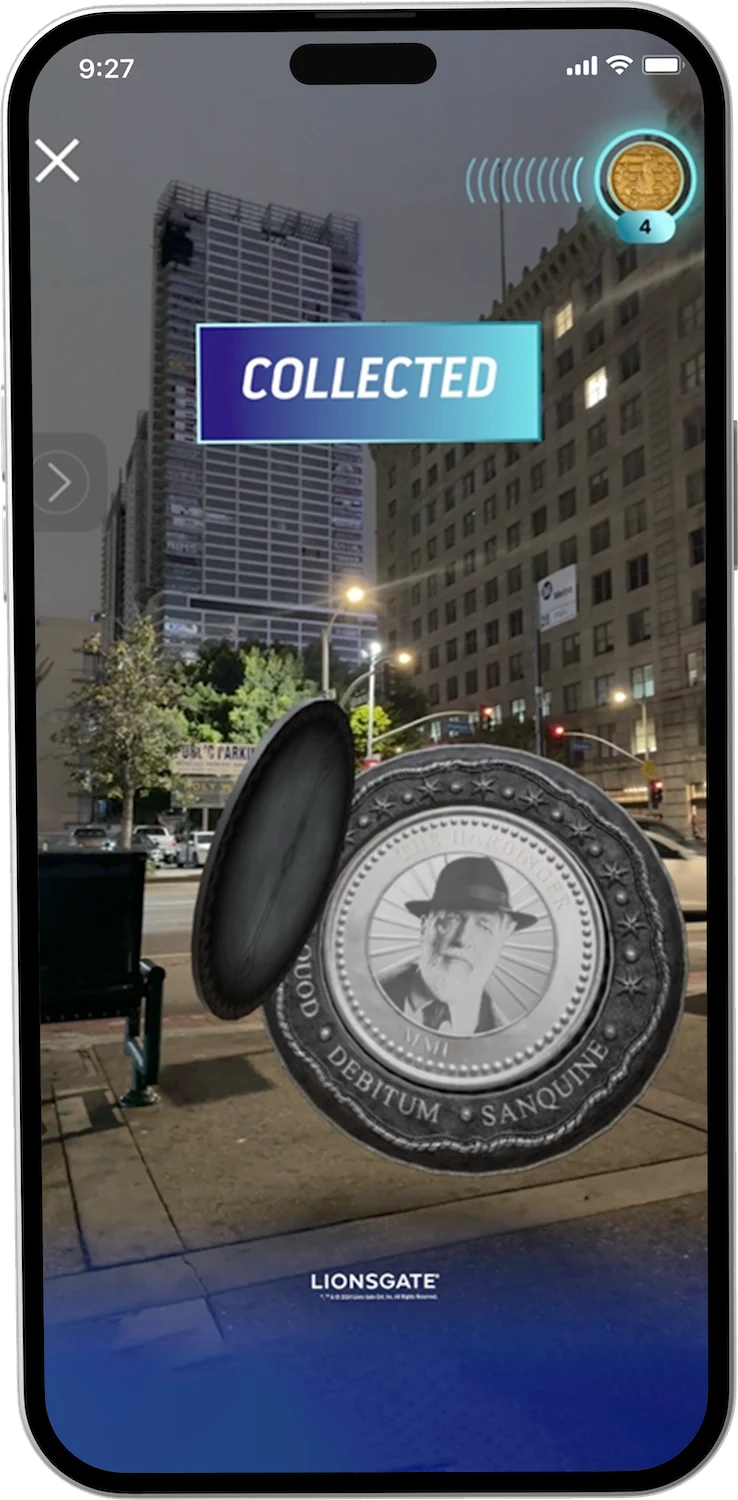
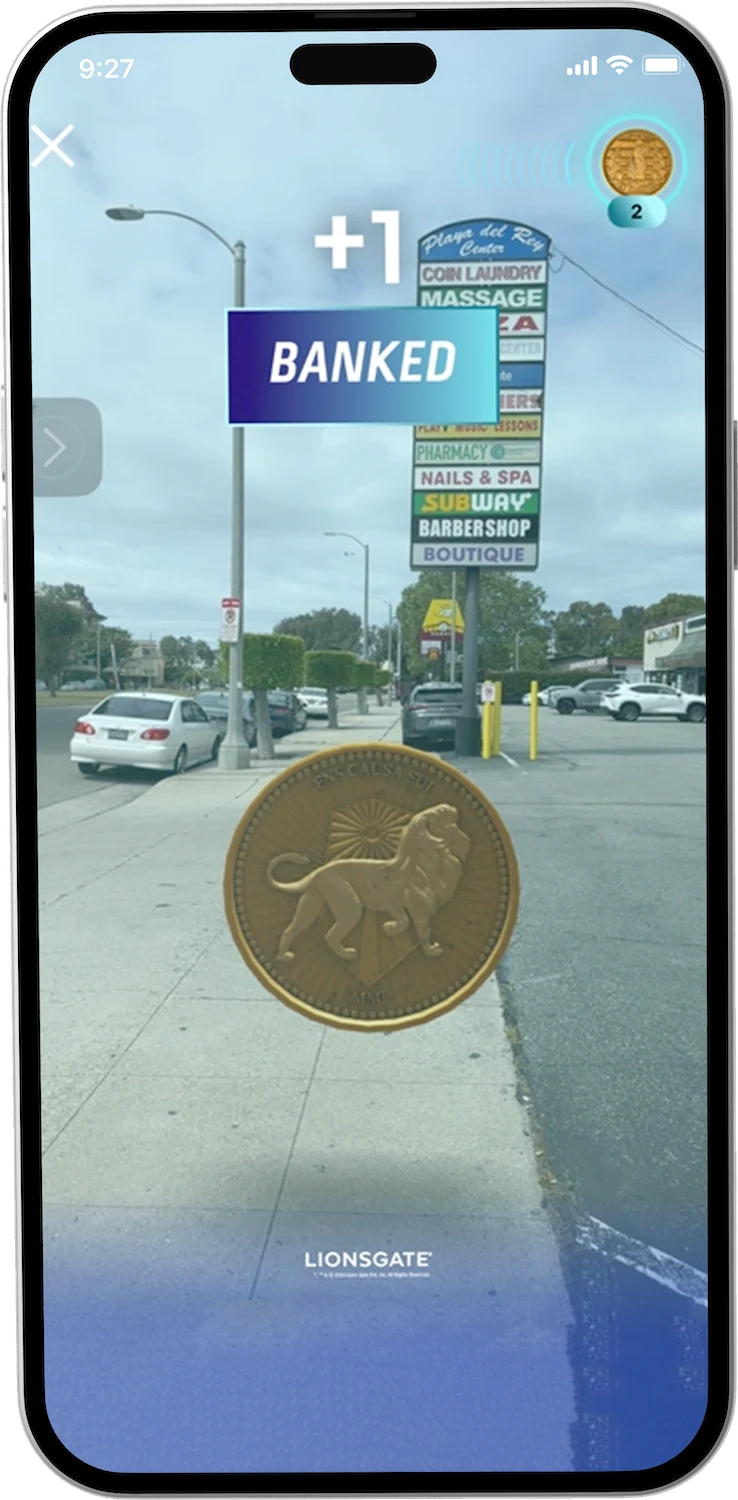
The Home Page. Login or register with Google, Apple or your email address.
The Home Page. Login or register with Google, Apple or your email address.
// NEXT CASE STUDY
The Pickup// START HERE
TELL US WHAT
YOU'RE BUILDING.
Twenty minutes with a senior engineer, and you'll leave with how we'd build it, roughly what it takes, and what we'd worry about first. We read every message ourselves and reply within one business day.
A rough idea is enough to start.
That's in front of us now.
You'll hear back within one business day, from an engineer rather than a form letter. Nothing else needed on your end.
Or just email us at hello@queencity.io